
How does human memory work?
Key takeaways :
Memory does not function as passive storage but as a dynamic and reconstructive biological system. This malleability, based on synaptic plasticity, makes attention and sleep essential for transforming information into lasting memories. Paradoxically, forgetting proves to be a vital selection function that prevents cognitive overload.
Is forgetting a sign of a saturated brain, like a hard drive reaching full capacity? Far from being a simple passive reservoir, memory is a dynamic biological process that does not freeze the past, but actively reconstructs it.
This article analyzes the precise mechanisms of encoding, storage, and retrieval to understand how learning and forgetting shape human identity.
Human memory: a biological process in motion
Having seen the vital importance of the brain, it is time to tackle the engine of our identity: memory, the system that not only stores information, but literally shapes who we are.
Why memory is anything but static storage
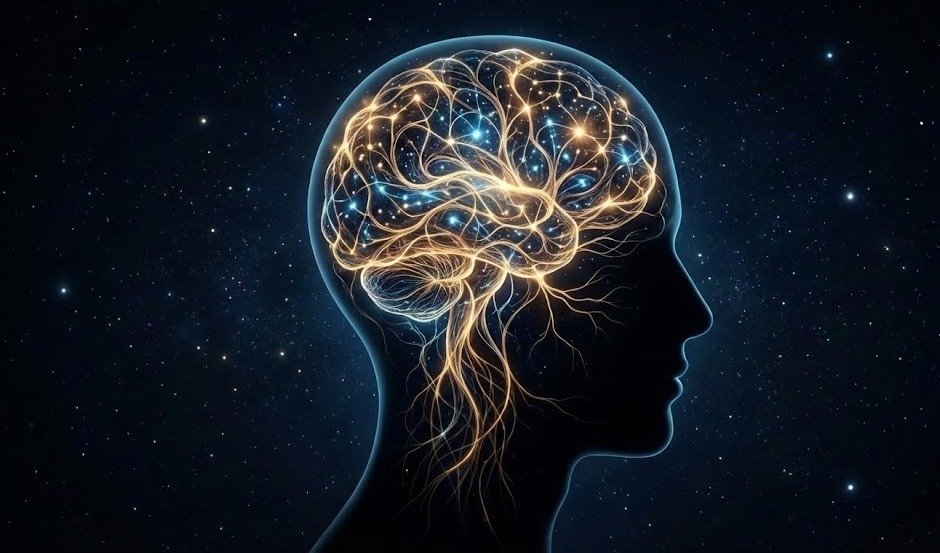
Far from the image of a static safe filled with dusty files, memory is a living biological faculty. It does not simply store information: it constantly transforms it to enable fluid interaction with the real world. It is the foundation that ensures the continuity of identity over time.
Inserm defines it as a faculty of reconstruction rather than simple capture. This means that the brain does not behave like a camera passively recording a scene. On the contrary, it reorganizes and readjusts information each time a memory is recalled. This process relies on intense collaboration between several areas of the brain, making memory a flexible material that is constantly in flux.
Why the brain is not a hard drive
The computer analogy, while appealing, is misleading. Unlike a computer, which stores data in fixed sectors, the brain uses a process called reconsolidation. Each time a memory is brought back to consciousness, it becomes temporarily “malleable” before being stored again.
This mechanism means that memory is not simply a matter of reading a file, but rather rewriting it. The brain adds elements from the present context, current emotions, or new knowledge. This biological fluidity is what allows memories to remain “alive” and adapt to new experiences, but it also explains why human memory is never a perfect copy of the past.
Memory in the digital age: the Google effect
The ubiquity of screens has given rise to what researchers call digital amnesia or the Google effect. Since search engines and smartphones act as storage extensions, the brain adapts its strategy: it no longer retains the information itself, but rather the path to access it.
Entrusting information to digital tools frees up the mind, but changes the way we retain knowledge. Without the device, the information disappears because it has not been engraved in our biological memory. On the other hand, this aid frees up time for more complex thinking, such as analysis or problem solving, provided that we continue to train our attention.
Encoding: the first step toward creating memories
For information to become a memory, it must first be “translated” by the brain into a language it can understand and store. This initial translation and sorting process is called encoding.
Selective attention: the brain’s first filter
Selective attention acts like a spotlight. Every moment, the mind is bombarded by millions of pieces of information (sounds, smells, lights). To avoid overload, the brain must filter this flow and only let through what it deems useful.
Without focused attention, information slips through the mind without ever being recorded. This is what happens when you read a page without thinking about it: the eye sees the words, but the brain does not “code” them.
The multitasking trap: The human brain is not designed to process multiple complex pieces of information at the same time. When multitasking, the mind simply “jumps” very quickly from one task to another. This back-and-forth movement exhausts cognitive energy and impairs learning quality, as encoding is constantly interrupted.

Emotion: the “Priority” label of memory
The brain has a highly effective tagging system controlled by the amygdala (the emotional center). It acts as a buffer that tags certain events with an “important” label.
The stronger the emotional response (fear, immense joy, surprise), the deeper the trace left in the neural networks. This mechanism allows us to instantly retain a life lesson or danger, without needing to repeat the information.
Priority to meaning: The brain quickly forgets neutral facts (such as a shopping list) but retains emotionally charged memories for decades. This is called emotional memory, a biological shortcut that ensures that what is essential is not lost.
Two ways to remember: Sound or Meaning
To transform a perception into a lasting memory, the brain uses two main strategies:
- Acoustic coding (sound): This is the “sound loop” method. It is used for short-term memory, for example, repeating a credit card number in your head. It is effective in the moment, but the information is forgotten as soon as your attention wanders.
- Semantic coding (meaning): This is the most powerful method for long-term memory. Instead of retaining the “form” of information, the brain seeks to understand its meaning.
The secret to a powerful memory: To anchor knowledge, it is more effective to link a new idea to something you already know rather than learning it by heart. This is called mental elaboration: the brain doesn’t just take snapshots, it weaves connections.
Storage and consolidation: preserving information for the long term
Once the information has been captured, the brain begins an essential stabilization process: consolidation. This process prevents the data from being erased and transforms it intolong-term memories.
The hippocampus: the gateway and temporary bridge
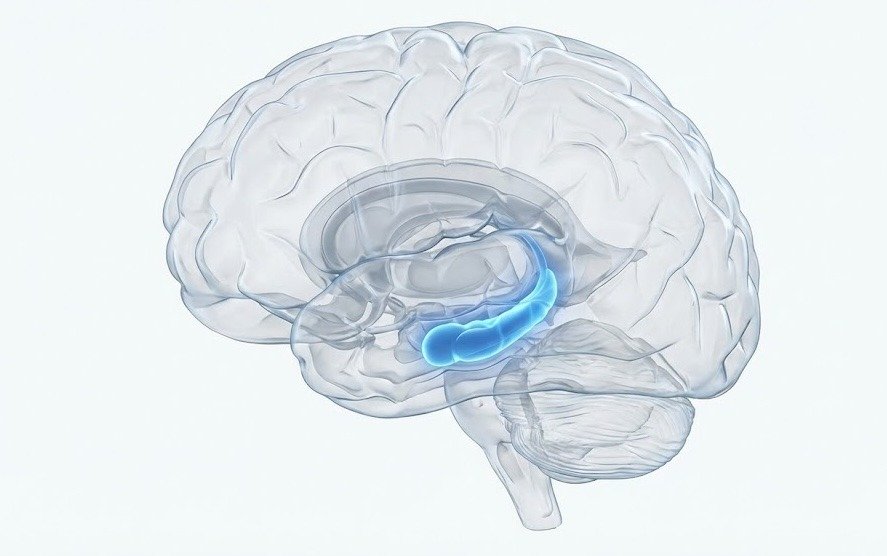
The hippocampus is the “conductor” of recent memory. It does not store memories permanently, but keeps them active for as long as necessary. Without it, the brain would no longer be able to record new facts.
Over time (sometimes several years), information gradually migrates to the cerebral cortex. This transfer allows the memory to become autonomous and to become permanently anchored in the gray matter. It is thanks to this transition that childhood memories remain intact even if the hippocampus is occupied by the day’s learning.
Sleep: the brain’s maintenance workshop
Sleep plays a key role in information retention. During the night, the brain does not rest; it processes the data from the previous day.
- Electrical reinforcement: During deep sleep, the brain replays learned sequences to strengthen neural networks. This nocturnal “replay” locks in acquired skills.
- Metabolic cleansing: The brain also takes advantage of rest to eliminate accumulated chemical waste. This sorting process eliminates unnecessary details to prevent cognitive overload and free up space for the next day.

Experimental research indicates that memory decline is less pronounced after a period of sleep than after 12 hours of wakefulness, suggesting that nighttime stabilizes the traces left by learning and slows down natural forgetting.
The recall: a reconstruction under influence
The process relies on recovery cues, which are like “keys” that reactivate the corresponding neural network.
A specific smell, a few notes of music, or a particular place act as anchors. These external triggers pull the thread of a complex network to the buried information. This is called specific encoding: we are better able to retrieve data if we find ourselves in a context similar to that in which it was created. But recall also depends on your inner state. Your emotional state influences your access to memories: this phenomenon, known as state-dependent memory, explains why it is easier to recall dark memories when you are in a gloomy mood. Your psychological context acts as a selective filter.
The mind does not function in a linear fashion; it works through associative thinking. Memory works through successive associations: one idea triggers another, creating a rapid and dense chain. If you can’t remember someone’s name, thinking about their job or where you last met them may be enough to “light the way” to the missing information. The brain does not produce an intact photograph; it gathers pieces of the puzzle and sometimes fills in the gaps to give meaning to the story, even if it means sacrificing historical accuracy for emotional coherence.
How to improve your memory? 4 effective memorization techniques
The use of cognitive strategies makes it possible to circumvent the natural limitations of working memory and optimize the encoding of information in the brain. These methods transform passive memorization into an active construction process, ensuring long-term retention.
| Technique | Mécanisme | Application pratique |
| The method of loci | Uses spatial memory (very powerful) to store abstract information in a familiar place. | Associate an idea with each piece of furniture in a familiar room to remember them in order. |
| Spaced repetition | Combat the “forgetting curve” by reactivating the information just before it fades away. | Review a concept on D+1, D+7, D+30 rather than blocking out a single intensive session. |
| Chunking | Group isolated elements into meaningful blocks to lighten the load on the prefrontal cortex. | Remember a phone number in 5 blocks of two digits rather than 10 separate digits. |
| Active recovery | Forces the brain to extract information rather than simply rereading a source. | Ask yourself questions about a text after reading it, rather than simply highlighting passages. |
The fragility of memory reconstruction
Remembering is above all a creative act. Unlike a faithful replay, memory works like a live video montage. For the brain, remembering is not “re-seeing,” but “re-constructing.”
This process has a major biological flaw: reconsolidation. Simply bringing a memory back to consciousness makes it temporarily fragile and malleable. During this moment, the information can be modified by present emotions or new beliefs before being “saved” again in the neural networks. Thus, personal stories evolve over time: the raw historical truth often fades in favor of a narrative consistent with the individual’s current identity.
The troubling phenomenon of false memories
The brain hates a vacuum and systematically seeks to make sense of its own gaps. To fill in the narrative gaps, it uses logical deduction and sometimes fabricates details from scratch to make the overall scenario coherent.
The influence of suggestion: This phenomenon can be exacerbated by external factors. A poorly worded question or a retouched photo can implant a completely false image in the mind.
Certainty vs. Truth: The major risk is that individuals end up sincerely believing these constructed fictions. In neuroscience, it is crucial to distinguish between subjective certainty (the feeling of being sure) and factual accuracy. Being convinced that you have experienced a scene in no way guarantees its biological reality.
Mapping different memory systems
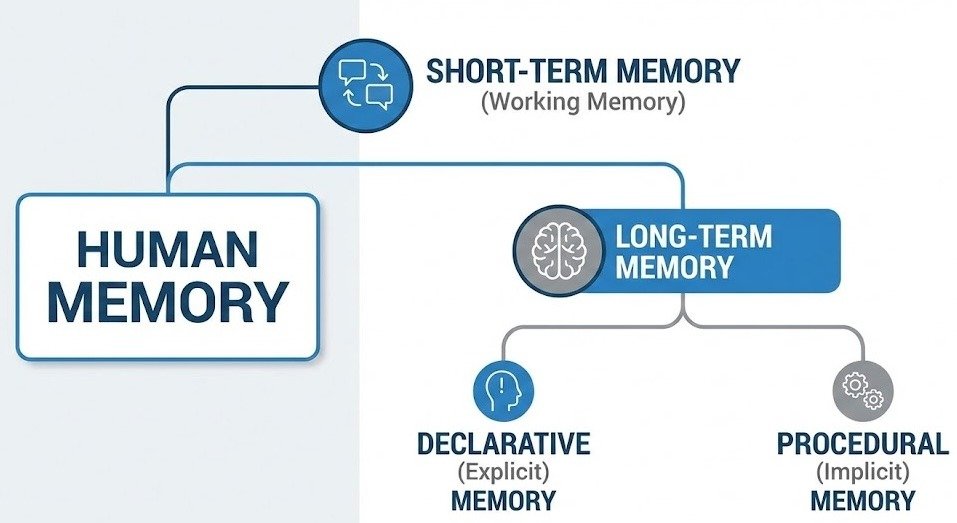
To better understand this apparent chaos, scientists have drawn up a precise map of the different types of memory, each with its own logic and its own territory in the brain.
Working memory: the office of the present
The prefrontal cortex acts as a temporary workstation. This is where immediate information is processed in order to act or solve a problem. This buffer memory is vivid, but extremely volatile.
This system has strict capacity limits: the brain can only juggle a handful of elements simultaneously. Beyond that, the system becomes saturated and information is lost. Yet it is this tool that fuels fluid intelligence and enables everyday reasoning.
Short-termworking memory has a limited capacity of approximately 7 items, plus or minus 2. This means that most people canonly consciously retain between 5 and 9 units of information simultaneously without mnemonic aids.
Declarative memory: conscious knowledge
Declarative memory encompasses everything that can be expressed through language. It is divided into two essential pillars that work together to structure consciousness:
- Episodic memory: It anchors dated personal memories. It is the unique “film” of life (events, emotions, contexts).
- Semantic memory: This compiles general and abstract knowledge. It is the “dictionary” of the world (meanings of words, capitals, concepts).
Together, they forge a deep identity and shared culture. They are conscious systems, accessible to the will and essential for sharing experiences with others.
Procedural memory: the body’s automatic responses
Procedural memory manages motor skills, such as riding a bike, swimming, or driving. It is located in more primitive structures of the brain (such as the cerebellum), far from immediate consciousness.
Learning begins with conscious effort, then, with repetition, the movement becomes fluid. The body then takes over from the mind. This memory is incredibly resistant to time and disease; even when names fade (as in Alzheimer’s disease), the hands often retain the movements they have learned.
Prospective memory: the agenda for the future
Prospective memory is the vital ability to remember to perform an action later. It acts as a real internal calendar.
Here, the brain links imagination to memory: it uses material from the past to simulate the future and anticipate action. This “mental journey through time” ensures that social life is managed through task planning and keeping appointments.
Forgetting: a vital function for mental balance
Understanding human memory requires accepting a paradox: to be effective, the brain must be able to erase. Forgetting is not a technical failure, but a survival strategy that frees up mental capacity and protects psychological balance.
According to Ebbinghaus’s research on the forgetting curve, without a recall strategy, a typical person can lose up to 50% of new information within hours of learning it, and even more over the course of days, if it is not reinforced.
A necessary sorting process for intelligence
The brain cannot store everything without risking saturation. It acts as an intelligent filter that eliminates insignificant details to retain only the essentials of experiences. This selection mechanism allows for quick decisions based on general patterns rather than an accumulation of cumbersome raw data. Without this ability to “make room,” the mind would become exhausted from processing useless information.
Flexibility and resilience
Forgetting also allows for a form ofemotional digestion. By smoothing out the contours of painful memories, the brain promotes resilience and allows us to adapt to changes in the present. This flexibility also prevents recall errors: by erasing obsolete information, such as an old password, the system ensures that only useful data remains accessible.
The special case of stress
However, it is important to distinguish this natural sorting process from the forgetfulness caused by chronic stress. In the latter case, the massive release of cortisol does not delete the information, but physically blocks the pathways to the memory in the hippocampus. This “brain fog” is a form of forced forgetfulness that hinders learning, unlike healthy forgetfulness, which optimizes thought processes.

Interference and cognitive overload
New information can sometimes overwrite old information. It’s a battle for attention within our neural networks. The winner erases the loser.
Cortisol impairs recall abilities by clouding the mind. A mind under pressure loses its ability to recover. Stress blocks access.
When faced with too much data, the brain becomes overwhelmed. It ends up not registering anything at all.
Cognitive reserve and resilience over time
Cognitive reserve can be compared to capital or life insurance for the mind. It is a stockpile of backup networks that the brain builds up throughout life. The more an individual learns and experiences, the more connections they make between their neurons. This surplus of connections allows the brain to remain efficient, even when it suffers the natural effects of aging or minor damage. In reality, the brain learns to use “detour routes” to circulate information when the main pathways are tired.
Maintaining your mental capital
This capital is not fixed at birth and can be strengthened at any age thanks to brain plasticity. Intellectual stimulation, such as regular reading or learning a new language, acts as a real workout that densifies gray matter. Similarly, rich social interactions and constant physical activity oxygenate tissues and promote the creation of new neurons. A healthy diet complements this process by providing the nutrients necessary for cell repair.
The strength of this reserve lies in its resilience. It does not stop time, but it compensates for losses by maintaining surprising mental agility. By cultivating these habits on a daily basis, we do more than just store knowledge; we actively protect our intellectual future by delaying the onset of symptoms associated with cognitive decline. It is a proactive defense strategy where each new discovery reinforces the overall strength of the structure.
Scientific truths and the limits of our knowledge
Finally, it is essential to distinguish between scientific facts and preconceived notions that often surround our understanding of memory.
Debunking the 10% myth
A particularly persistent misconception claims that humans only use a tiny fraction of their brain’s potential. However, modern medical imaging proves the opposite: the entire brain is active. Even during sleep or complete rest, neurons work tirelessly to regulate the body and consolidate information.
From an evolutionary perspective,the brain is an extremely energy-intensive organ, consuming around 20% of the body’s total energy. Nature would never have preserved such a costly structure if it remained largely unused. The reality, therefore, does not lie in hidden potential that simply needs to be “awakened,” but in optimizing existing connections through learning and training.
The truth about photographic memory
The so-called “photographic” memory is a concept that needs to be strongly qualified. This phenomenon, which allows an image to be recalled with absolute precision, occurs almost exclusively in certain children and generally disappears in adulthood. In adults, a perfect, fixed vision of memories practically does not exist.
Natural memorization skills should not be confused with mental photography. Memory champions do not have a magical gift, but use complex cognitive strategies to associate data with images or places. Biologically, the brain is programmed to retain the overall meaning and usefulness of information rather than recording every visual detail like a digital sensor.
The gray areas of research
Despite major advances in neuroscience, current science still faces technical and theoretical limitations. The mysterious transition between the electrical signal of the neuron and the emergence of abstract thought or feeling remains one of biology’s greatest mysteries. We still do not know precisely how the awareness of a memory is formed from a simple chemical reaction.
Variability between individuals also raises questions. Current models struggle to explain why, given equal abilities, some people retain information with surprising ease while others have to work much harder. This difference in brain plasticity suggests that many genetic and environmental mechanisms remain to be discovered.

FAQ: How human memory works
How does human memory actually work?
Contrary to popular belief, your memory does not function like a video camera or hard drive that passively records the world. It is a dynamic, living biological process that takes place in three key stages: encoding (the transformation of perceived information), storage (consolidation via neural plasticity), and retrieval (the reconstruction of the memory). Current research emphasizes that each memory is a malleable reconstruction rather than an exact copy of reality, involving a vast network of interconnected brain areas.
What is the role of the hippocampus in memory?
The hippocampus acts as a conductor for your new memories, particularly those related to events you have experienced (episodic memory) and spatial navigation. Clinical data, particularly from studies of amnesic patients, indicate thatit is essential for transforming an immediate experience into a lasting memory. It works in tandem with the cortex: it initially captures information before gradually transferring it to other areas of the brain for long-term storage, a process that appears to be reinforced during sleep.
Why is sleep important for memory?
Sleeping is not a waste of time; it is a crucial moment when your brain actively consolidates information. During the different phases of sleep (slow-wave and REM), neural networks reactivate information learned during the day to stabilize it and integrate it permanently into the cortex. Studies show that sleep also allows the brain to sort through information, eliminating superfluous details to avoid cognitive overload, thus ensuring better memory performance upon waking.
What is encoding and how can it be improved?
Encoding is the very first gateway to memory: it is the process that transforms a perception (visual, auditory, semantic) into a neural trace. Without sustained attention, this encoding cannot take place. To reinforce this stage, research suggests focusing on semantic encoding, i.e., seeking to understand the deeper meaning of information and linking it to knowledge already acquired, rather than simply repeating data mechanically.
Is there really such a thing as photographic memory?
This is a widely held neuromyth. While some forms of eidetic memory (the ability to retain very precise images) exist in certain children, they tend to disappear in adulthood. Science tells us that human memory is selective and reconstructive: it does not capture a perfect image pixel by pixel, but rather retains meaning and emotionally significant elements. Memory “champions” actually use association and training techniques, not a biological gift for mental photography.
Why do we forget certain information?
Forgetting should not be seen as a failure, but as a physiological process necessary for the health of your brain. To remain efficient and adaptable, the nervous system must eliminate information deemed secondary or obsolete in order to avoid cluttering neural circuits. However, forgetting can also result from interference (new information replacing old information), a lack of consolidation (often linked to sleep), or chronic stress that disrupts access to memories.
What are recovery indicators and what are they used for?
Recovery cues are mental “anchors” — such as a smell, a word, a place, or an emotion — that help your brain retrieve a stored memory. They function like an address that allows you to access information in the vast library of your long-term memory. In a learning context, multiplying these cues (for example, by associating an image with a concept) greatly facilitates subsequent recall, as it creates multiple access paths to the same information.
The last word
Far from being a static hard drive, memory is a living architecture that constantly rebuilds itself to illuminate the future. Its performance relies on a vital balance between active learning, restorative sleep, and necessary selective forgetting. Cultivating this capital means protecting your personal history while strengthening your mental agility on a daily basis. In short, remembering is not just about storing the past; it is the art of reinventing oneself every day.
Access all our specialized articles on this topic here