
Artificial intelligence and creativity: How to use AI to generate original ideas without losing your uniqueness
Key takeaways:
Artificial intelligence is not just a productivity tool; it is an idea generator.
By creating connections that our brains don’t always see, it helps break through writer’s block.
But be careful: AI provides the structure, you provide the soul.
Your sensitivity and emotions are the only defenses against standardization.
Artificial intelligence can generate thousands of ideas in seconds.
But without your input, it mainly produces mediocrity. Its true power is not to create for you, but to spark new connections in your brain.
Used well, it becomes a catalyst for creativity. Used poorly, it standardizes your thinking.
By understanding the mechanisms of collaboration at play, you can adopt methodologies that transform the tool into a true brainstorming partner.
AI and creativity: spark rather than speed
We often make the mistake of seeing artificial intelligence as simply a time-saving machine. However, its real strength is not in working faster, but in forcing us to create differently. In a world already saturated with formatted content, the challenge is no longer to mass produce, but to rediscover a boldness that algorithms do not possess.
Neuroscience Focus: Stimulating Your “Default Mode Network”
Have you noticed that your best ideas often come to you in the shower or while walking? That’s because your brain activates the Default Mode Network (DMN).
The RMD is the seat of imagination and creative synthesis. Unlike “work” mode (which focuses on a specific task), it builds bridges between distant memories and opposing concepts.
What is the role of AI here? It acts as a “neuron disruptor.” By asking it to make unlikely associations, you force your RMD to stray from its usual thought patterns. AI does not replace your imagination; it gives it new raw material to work with.

Why artificial intelligence cannot replace human creativity
Imagine AI as a technical assistant with formidable efficiency. It masters syntax, graphic rendering, and the complexity of software. It is the hand that executes. But it remains blind without the mind that conceives.
Today, the technical barrier is crumbling: you no longer need to be a virtuoso with a paintbrush or code to bring an idea to life. The modern creative is no longer the one who draws the straightest line, but the one who dares to imagine a direction that no one else has seen.
Your instincts, the last line of defense
AI is a machine that looks in the rearview mirror. It calculates probabilities based on what has already been done. It has no desires, no intentions, and no message to convey. You, on the other hand, possess forward-looking intuition: that unique ability to sense a truth that does not yet exist in the archives.
A concrete example: The scent of childhood If you ask an AI to write a scene about “the memory of a grandfather,” it will draw on clichés: a leather armchair, a pipe, a deep voice. It’s clean, but it’s an average statistic. Humans, on the other hand, will look for the killer detail: the smell of turpentine on his hands, the precise sound of a key in a lock, or that particular silence before he speaks. It’s this “non-statistical” detail that creates emotion. AI can generate the setting, but only you can breathe life into it.

Thought engineering: optimizing human-machine collaboration
Working with AI isn’t just about delegating tasks to save a few minutes in your day. It’s about learning to guide a partner that extends your own reasoning. The challenge is to transform this tool into an extension of your brain: an ally that strengthens your thinking rather than putting it to rest.

How to use AI to generate new ideas
We have all noticed that our best ideas often come as a surprise, when two unrelated thoughts collide. But on a daily basis, our brain seeks to conserve energy; it therefore prefers to stay on the beaten track and recycle what it already knows.
This is where AI becomes a valuable ally. It never tires and has no preconceptions. It can explore thousands of unusual avenues at lightning speed to spark that little spark of the unexpected on your behalf.
Your new role: the conductor
Since the machine is capable of generating fifty proposals in the blink of an eye, the nature of your job changes. You no longer spend your time “doing” (drawing each line, writing each word, calculating each detail); you spend your time choosing.
It’s exactly like a conductor: AI is the instrumentalist: it has the technique, it plays fast, and it knows all the scores by heart. You are the maestro: you listen to the machine’s output, you sort out what is generic, and you decide which proposal has enough soul to be kept.
Your neuro-creative routine in 3 steps
To avoid being overwhelmed by the tool and instead take control of it, here is a method to apply during your next work session:
| Step | Action | Cognitive objective |
| 1.Solo Anchoring | Write down your first three ideas on paper, without AI. | Protect your raw intuition before it is influenced by the algorithm. |
| 2.AI Friction | Ask the AI: “Suggest five opposing viewpoints to these ideas.” | Create a cognitive break to escape the “déjà vu.” |
| 3.Human Synthesis | Merge the AI structure with your personal details (the famous “scent of childhood”). | Reinject emotion and authenticity into the final result. |
By following this protocol, you avoid “blank page burnout” (exhaustion in the face of emptiness) while avoiding “cognitive smoothing” (the feeling of losing your own voice). You remain the pilot; AI is just the fuel.
Ethics and originality: who is the real creator?
The arrival of artificial intelligence in our creative processes raises exciting, but sometimes dizzying questions. If a machine can produce an image or text in a matter of seconds, what becomes of the notion of authorship? In this new landscape, the value of a work is no longer measured solely by the result, but by the human intention that gave rise to it.
Who came up with the idea?
The debate on intellectual property is at the heart of current thinking. When a human directs a machine to create a work, where does the tool end and the artist begin?
To settle the matter, the law is beginning to set clear limits. In Europe, the AI Act and case law reiterate a fundamental principle: for a work to be protected by copyright, it must bear the “imprint of the personality” of its creator.
In concrete terms, this means that value is shifting. It is no longer the technical operation of the machine that counts. It is the finesse of your “guidance,” the precision of your choices, and the way you sculpt the result that makes you the author.
If you let the machine decide everything, the work belongs to everyone. But if you inject your vision into it, the machine remains the brush, and your mind remains the sole master craftsman.
Avoiding the “average” trap
The greatest risk of AI is what is known as uniformity. Since algorithms feed on what already exists, they tend to produce “average” results that are bland and unremarkable. If all creators use the same tools in the same way, our culture risks becoming dull and predictable.
The solution to counter this digital dullness? It’s you. To achieve exceptional results, you need to “corrupt” the algorithm with your own experiences, imperfections, and atypical ideas. It’s your uniqueness, your singularity and unpredictability, that forces the machine to think outside the box. AI provides the foundation, but it’s your personal touch that creates the exception.
From data to ideas: the secrets of fruitful collaboration
To get the most out of AI, it’s not enough to send it simple commands. The challenge is to learn how to push it out of its statistical comfort zone so that it becomes a real driver of innovation.
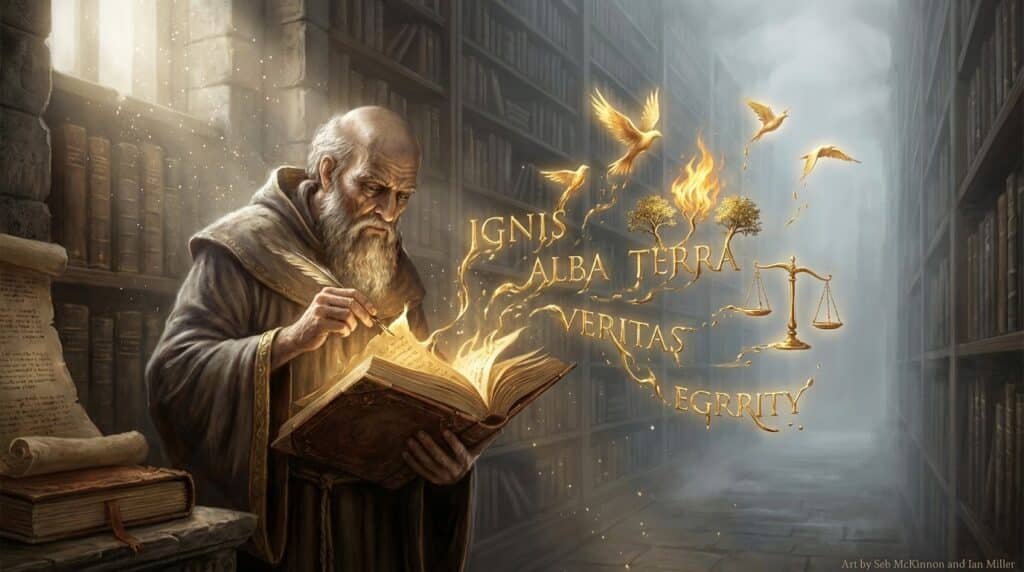
Restoring meaning to words
AI has one major flaw: it loves clichés. It reflexively draws on the most common phrases found on the web to respond to you. To break this vicious cycle, one powerful technique is to anchor it in etymology.
If you ask her about “work,” she will undoubtedly give you a generic answer about productivity. But by forcing her to consider the Latin origin of the word—tripalium, an instrument of coercion—you force the machine to change frequency. She then leaves managerial jargon behind to explore deeper and more human reflections. It is by paying attention to the precision of your terms and demanding historical or philosophical perspectives that you transform a banal answer into an idea with substance.
Turning failure into leverage
The other major change lies in our ability to test ideas at breakneck speed. In the past, exploring fifty different avenues for a single concept was a luxury that no one could afford, due to lack of time or budget.
Today, AI transforms your office into a permanent prototyping laboratory. This speed radically changes your relationship with error: you can now afford to “fail fast” in order to keep only the most daring solution. Instead of exhausting yourself trying to achieve perfection on the first attempt, use the machine to scan dozens of variants in a matter of minutes. It is in this strategic sorting process, where you eliminate the obvious to retain only the disruptive, that true innovation lies.
Human arbitration versus algorithmic standardization
In a world where everyone has access to the same tools, the real difference is no longer made by the ability to generate content, but by the ability to judge content. This is where your role as an arbiter becomes vital: you are the one who transforms a standard response into a remarkable idea.
Becoming the algorithm disruptor
AI has a natural tendency toward consensus. By definition, it seeks to please the greatest number of people by offering “average” and unremarkable results. If you accept its proposals without reworking them, you risk producing work that is technically correct but completely invisible in the digital flow.
Your mission is therefore to become a deliberate disruptor. To avoid being lulled into complacency by the ease of use of the tool, keep in mind that if a result seems too “obvious,” it is not yet good enough. Use your critical eye to eliminate anything that is too predictable and keep only the gems. By systematically injecting a touch of dissonance, you break the monotony of the machine and restore real value to your project.
Raw emotion, your strategic compass
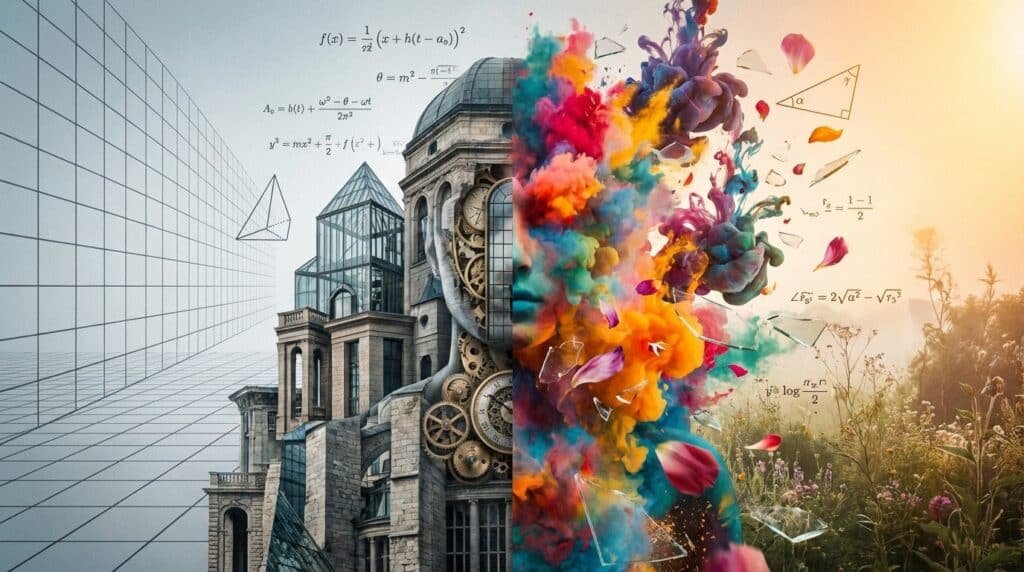
The algorithm can simulate many things, but it feels nothing. This is where your successes, failures, and emotions become your greatest strategic assets.
Consider technology as the skeleton of your project: a solid, logical, and efficient structure. But it is you, and you alone, who bring it to life. By infusing your subjectivity into the work of the machine, you transform a cold production into a work that truly touches its audience. Your personal experience is the secret ingredient that allows you to move from a simple technique of execution to a creation that has a soul. By pushing the machine to its limits and imposing your own sensibility, you create that unique friction between your intuition and calculation, where excellence is born.
Mental hygiene: the art of staying in control of your thoughts
By constantly working with high-performance machines, we risk forgetting that our brain remains our primary creative tool. To ensure that AI remains an extension of your intelligence rather than a crutch that weakens you, it is essential to protect your autonomy and preserve moments of downtime.
Protecting your independence: the effort that sets you free
Intellectual laziness is undoubtedly the most subtle trap of the digital age. Since AI can answer any question, our minds are tempted to stop making an effort. However, true mastery of the machine requires a trained, sharp mind capable of deep thought.
That’s why it’s vital to continue thinking away from screens. Consider brainstorming on paper or reading complex texts as a form of cognitive muscle training. By training your mind to work hard, you ensure that you remain in control. It is this autonomous thinking power that will enable you, once in front of the screen, to steer the algorithm with a rigor and clarity that cannot be achieved through ease alone.

The power of creative silence
Innovation rarely arises from the constant noise of the digital flow. While AI is a powerful amplifier of ideas, it cannot replace the time needed for your thoughts to mature. Silence is not a void; it is the space where your own creative synthesis can unfold.
Getting into the habit of disconnecting before even using the tool is a valuable reflex. By letting your ideas settle in peace, you allow them to take root in your own experience rather than in algorithmic suggestions. Learning to listen to yourself in silence ensures that AI will serve to magnify a vision that is already yours, rather than filling a void.
A reflex to protect your mind
To maintain this agility, try implementing a simple rule: for every hour spent co-creating with a machine, allow yourself ten minutes of pure reflection, without any devices within reach. This “cognitive breathing” time is the best guarantee of your long-term originality.

FAQ: The essentials for mastering your duo with AI
AI vs. Productivity: What’s the Real Difference? Traditional productivity seeks to speed up execution (doing things faster). The real creative lever of AI, on the other hand, acts on the genesis of ideas. Where our minds are sometimes limited by their own routines, AI helps to explore narrative structures or visual concepts that are completely inaccessible to the brain alone. It doesn’t just save time, it opens new doors.
Can AI have creative intent? No. A machine operates based on statistical probabilities, not desire. Creative intent remains 100% human: you are the one who provides the spark, the message, and the final artistic direction. To put it simply: AI is the musical instrument, but you are the composer.
How can you avoid producing bland, “déjà vu” content? The secret lies in the richness of the context. To achieve a unique result, inject unique personal data and use “step-by-step reasoning.” The more atypical your request is and the more it is rooted in your own experience, the further the result will stray from the statistical average to become an original creation.
How can you stay mentally agile in the face of AI? Practice creative disconnection regularly. Keep brainstorming with pen and paper to strengthen your independent thinking. Think of AI as a sports coach: it’s there to help you lift heavier weights and go further, but it should never do the exercise for you.
Are we at risk of global cultural uniformity? The risk is real if we completely delegate our thinking to algorithms. That’s why your real-world experience and critical thinking are vital. To maintain the richness of our culture, we must use AI to amplify our uniqueness, not to blend into the machine’s mold.
Final word:
AI can boost your ideas, but it can’t feel, dream, or choose for you. Your imagination remains your unique territory—keep complete control over it.