How the brain works: neurons and cognition
Key Takeways :
The brain is a dynamic organ, capable of transforming itself through neuroplasticity.
This ability allows you to learn at any age.
Composed of 86 billion neurons, it accounts for only 2% of your weight but consumes 20% of your energy.
Why does our biology influence our impulsive reactions, memory lapses, or choices?
This article explains the interaction between neural networks, cognition, and emotions.
Discover how brain plasticity shapes your stress management and mental performance.
You will discover the secret mechanisms of your brain’s plasticity to better manage your stress, optimize your memory, and boost your mental performance thanks to the latest major discoveries in modern neuroscience and current scientific research.
How the human brain works: a tiered organization
Now that we’ve laid the groundwork for understanding the importance of the brain, it’s time to open up the hood and see how this machine is physically put together.
The telencephalon and the management of higher functions
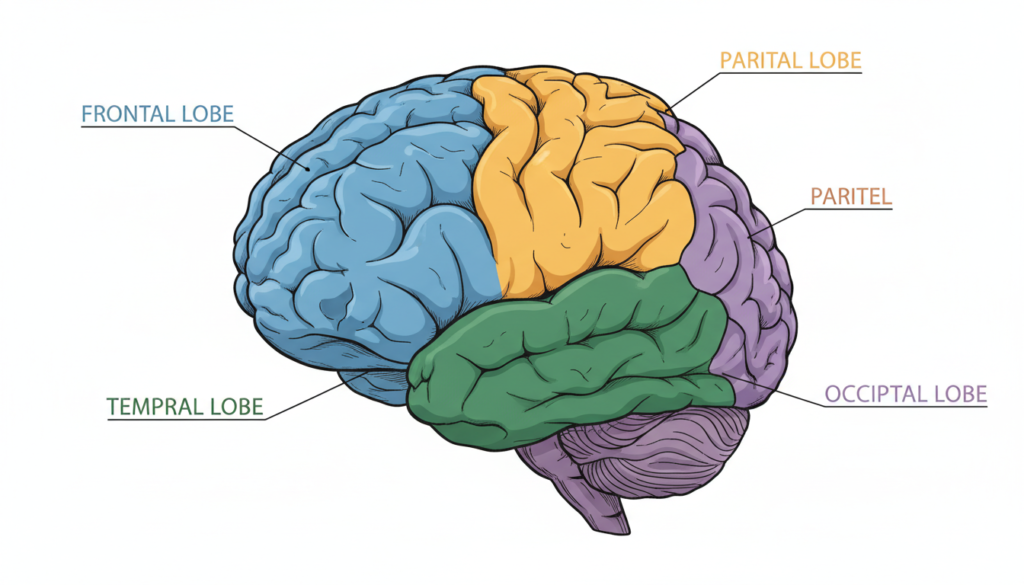
The telencephalon embodies your intellectual command center. The frontal lobes guide your decisions while the parietal lobes assemble your sensations. It is the engine of your thought.
The temporal lobes manage your auditory memories. At the back, the occipital lobes translate light into images. They decode every detail of your surroundings.
Each zone has a specific mission. This is where the subtlety of your thoughts comes into play.
The cerebellum for balance and coordination
The cerebellum remains hidden at the back of the skull. It adjusts your posture without requiring your attention. It is your ally in standing upright with ease.
This structure also automates your technical movements. Walking or tapping on a keyboard becomes fluid. Without it, each movement would require exhausting mental effort.
It operates silently. Its precision guarantees essential motor flexibility.
The brain stem and vital automatic controls
The brain stem ensures your immediate survival. It regulates your heart rate and breathing without pause. These functions are automatic. You do not need to control your heart. It serves as a bridge to the spinal cord. It is the necessary passageway for all your nerve signals.
Cette tour de contrôle est archaïque. Elle reste pourtant la plus vitale.
The division of roles between the two hemispheres
The left brain is often contrasted with the right brain. However, the two halves work together every second. They exchange data flows to harmonize your thoughts.
Specialization exists, but it is nuanced. Functional unity prevails over division. Your brain works as a cohesive unit.
- Left hemisphere: logic and language
- Right hemisphere: intuition and spatial vision
The distinction between gray matter and white matter
Grey matter makes up your outer cortex. This is where information is processed. It contains the cell bodies of your active neurons.
Below, the white matter provides the wiring. It carries signals between different regions of your brain.
One analyzes, the other communicates. This duo enables exemplary mental responsiveness.
86 billion neurons and their allies in the shadows
Now that the overall structure is clear, let’s zoom in on the workers who keep the shop running: the nerve cells in your skull.
Anatomy of a typical nerve cell
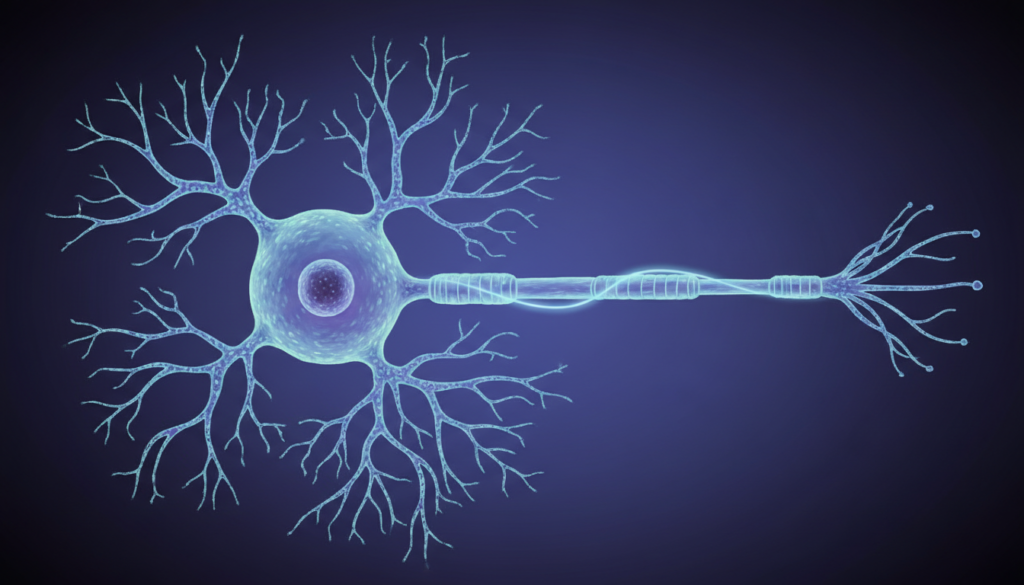
A neuron has a central cell body. Your dendrites then capture incoming signals. The axon propels the information to the next cell without hesitation.
This biological architecture is optimized for speed. The signal always travels in one direction. This is the basis of all biological communication. To learn more, you can explore this detailed file on neural anatomy provided by Inserm.
Every detail of this anatomy serves effective transmission. Here, form dictates function with formidable precision and true consistency.
The different types of neurons according to their function
Motor neurons activate your muscles. Your sensory neurons detect cold or pain. Interneurons connect them with remarkable efficiency.
They organize themselves into dense, rich networks. This web allows for the processing of varied data. Collaboration remains the key to human intelligence and your consciousness.
Here are the three main categories:
- afferent (sensory) neurons: they capture and transmit external stimuli to the brain.
- Efferent (motor) neurons: they carry commands from the brain to the muscles.
- Les interneurones : ils assurent la liaison et le traitement de l’information au niveau local.
This ongoing collaboration creates perfect synergy, transforming each signal into an appropriate biological response.
The role of glial cells in structural support
Neurons are not alone. Glial cells such as astrocytes nourish them. They also keep the brain environment clean to prevent malfunctioning.
Oligodendrocytes create the myelin sheath. This fatty layer insulates the axons electrically. It allows the signal to travel much faster. It is a natural insulator that is essential for your survival and responsiveness.
Without these allies, neurons would wither away. They are the guardians of your daily brain health and protect your faculties.
The integration of neurons in the central nervous system
These billions of cells form an architecture. It connects the brain to the rest of the body. It is the foundation of all your mental activity and thoughts.
Each nerve impulse contributes to a whole. The cellular unit merges into the overall system. Richness arises from this massive and precise organization that defines us.
How do synapses ensure the transmission of messages?
The stage is set, the actors are there, but how do they actually communicate with each other? Let’s now enter the secret world of synaptic chemistry to understand how the human brain works.
The conversion from electrical signal to chemical signal
The electrical impulse travels through your axon very quickly. When it reaches the end, it must cross a narrow gap. This space is called the synaptic cleft, which is essential.
There, the signal suddenly becomes chemical. Molecules travel through space to faithfully carry the message. They then attach themselves to the receptors of the neighboring neuron. The process is with absolute surgical precision.
This is called action potential. Think of it as a spark that turns into a specific chemical word.
The role of glutamate and GABA in brain balance
Glutamate is the brain’s real accelerator. It stimulates your neurons to activate sharp thinking. It is the most common neurotransmitter in humans.
Conversely, GABA (gamma-aminobutyric acid) acts as a brake. It calms overall activity to prevent dangerous overheating. This balance is vital for our mental stability. Without it, your internal system would quickly collapse.
Too much excitement often leads to painful anxiety. Too much inhibition leads to truly deep and lasting lethargy.
Dopamine and serotonin to regulate mood
Dopamine effectively boosts your motivation. It is closely linked to the reward circuit. It is what actually drives you to take action.
Serotonin stabilizes your mood over the long term. It also influences your essential daily sleep. A lack of serotonin can quickly lead to deep and overwhelming sadness.
Here is an overview of the functions of these molecules. This table summarizes their main roles. They are the basis of your well-being.
| Molecule | Key features |
| Dopamine | Motivation, Enjoyment |
| Serotonin | Sleep, Serenity |
| Glutamate | Learning, Memory |
Interhemispheric dialogue via the corpus callosum
The corpus callosum physically connects your two hemispheres. It is a massive, dense bridge of nerve fibers. It allows for perfect coordination of internal information.
Data constantly flows from one side to the other. This allows your logic and intuition to merge. Without this bridge, our abilities would be divided. The brain would then lose its coherent overview.
It is the major highway of internal information. It ensures that your mind remains a functional and solid unit.
4 cognitive processes for processing information
Chemistry and electricity create thought. Let’s now look at how these signals are transformed into concrete functions such as memory or language.
- Perception for decoding external stimuli
Perceiving means interpreting the real world around us. Your brain transforms invisible waves into clear images. It is a constant and rather impressive process of reconstruction.
The thalamus plays the essential role of central triage here. It receives signals from your senses. It then sends them to the dedicated areas. Nothing ever reaches the cortex without its prior and definitive approval.
Our senses are ultimately just passive sensors. The brain remains the true creator of your daily, precise mental images.
- The mechanisms of attention and concentration
Attention acts as an essential selective filter. It eliminates unnecessary background noise from your environment. It allows you to stay focused on what is essential.
We distinguish between selective attention and sustained attention. The former chooses a specific target. The latter maintains your effort over time. It is a limited and truly precious resource for all of us in this noisy world.
Without attention, information quickly evaporates from the mind. It is the only effective gateway to your learning and knowledge.
- The storage and retrieval of memories in memory
Memory is not a single, fixed block. It is divided into short-term and long-term memory. The hippocampus orchestrates all of this important nighttime consolidation.
Learning means creating new physical pathways. The brain constantly reorganizes its connections. Recalling a memory means reactivating these pathways. It is a dynamic process and can sometimes be very fragile for individuals in their daily lives.
Forgetting is as necessary as remembering facts. It allows you to keep the essentials in mind so you can move forward calmly in your life.
- Language as a tool for structuring thought
Language structures our view of the inner world. Broca’s area is responsible for speech. Wernicke’s area allows us to understand others and their ideas.
These areas work together to decode symbols. The brain translates sounds into abstract concepts. This is a cognitive feat unique to humans. It allows us to convey our complex knowledge to other humans in a fluid manner.
To speak is to bring order to the mind. Words become the vehicle for pure ideas, enabling us to communicate with those around us.
Why does the limbic system control your emotions?
Pure reason is a myth. Beneath the cortex, an older and more powerful engine dictates the functioning of the human brain: the limbic system.
The amygdala as a sentinel against danger
The amygdala detects threats in a flash. It triggers fear long before any thought process. It is an ancient survival mechanism that is essential for staying alive every day.
It sometimes bypasses normal logical reasoning. When faced with danger, action takes precedence over slow analysis. It prepares your body to flee. Its sole role is to keep you alive at all costs when faced with the unexpected.
It is the vigilant sentinel of your brain. It never truly sleeps to ensure your constant safety. It watches over you tirelessly.
The close link between emotion and decision-making
Our emotions influence all of our rational choices without exception. The prefrontal cortex constantly consults the emotional center. This interaction defines your simplest daily preferences. Nothing is ever purely logical.
In fact, without emotions, decision-making quickly becomes impossible and very slow. Feelings serve as a quick internal compass. They help us assess real risks. It’s a successful marriage between logic and pure emotion.
We are not cold, lifeless robots. Our gut feelings often speak louder than our most carefully constructed thoughts. That is our human nature.
Stress management and emotional regulation
The hypothalamus manages the hormonal response to intense stress. It releases cortisol to mobilize available energy. This is a useful reaction, but it is very tiring for your body. It is important to listen to your body.
The brain always seeks to restore its natural balance. This state of stability is called homeostasis. Mechanisms for restoring calm do indeed exist. They enable you to regulate your inner turmoil with great effectiveness.
Knowing how to breathe properly helps calm this complex system. The body and mind relax together to restore a welcome sense of serenity. Take this time for yourself.
The influence of emotional memories on behavior
A significant event becomes increasingly ingrained in our memory. Emotion acts as a powerful memory glue. We remember much better what touches us deeply in our hearts. This is a biological fact.
These memories influence our future reactions unconsciously. The brain avoids what hurt us in the past. It actively seeks out what brought us pleasure. This is how our experiences shape us every day of our lives.
So there you have it, the past is never far behind you. It remains engraved in your limbic circuits.
Brain plasticity, or the art of reinventing oneself
Although the limbic system is ancient, it is not fixed. The brain has an incredible ability: that of remodeling itself.
The ongoing remodeling of synaptic connections
Neuroplasticity is a real and concrete structural change. Synapses are strengthened through frequent use. Conversely, unused connections weaken fairly quickly without stimulation.
Nothing is ever set in stone with you. The brain is an organ in perpetual motion. It adapts to every new experience. It’s a form of biological agility that is quite impressive and useful in everyday life.
This flexibility defines the modern concept of neuroplasticity. Your neurons change shape according to your regular lifestyle habits.
The impact of learning on physical structure
Learning a new language physically changes your brain. Neural density increases in specific areas. Intellectual effort leaves very visible traces on your own brain anatomy.
A rich environment stimulates this internal growth. The more you use your mind, the more it expands. It’s really like a muscle that develops. Inaction, on the other hand, promotes the decline of your precious intellectual abilities over time.
Curiosity is the best fuel for the brain. It keeps our internal networks young for a very long time to come, for all of you here today.
The persistence of neuroplasticity in adulthood
The brain does not freeze at adulthood. This is a myth that must finally be dispelled. Synaptic regeneration continues very late into your own human existence.
Seniors can still acquire new skills. The process is just a little slower. Plasticity remains an ally throughout life. It really is never too late to learn new and exciting things.
Every day is an opportunity to change. Our neurons are ready to follow us in every exciting new life project for the distant future.
The biological limits of neural adaptation
Aging does impose certain limitations. Some areas shrink over time. Memorization sometimes becomes a little more difficult for you now in your daily life here.
Factors such as stress hinder flexibility. A healthy lifestyle protects these faculties. Adaptation has its limits but remains powerful. It is important to maintain your own brain power every day with great care and attention.
Understanding the effects of aging helps you take better action. Your mind truly deserves this constant attention on a daily basis to remain sharp and alert for a very long time.
The enormous energy requirements of your skull
Reinventing yourself takes energy. And to say the least, the brain is an insatiable consumer.
Massive consumption of glucose and oxygen
The brain weighs very little but consumes a lot of energy. It uses 20% of your total energy. This organ can never stop working, even during deep sleep.
It depends on a constant supply of glucose. Without oxygen, the damage is immediate and severe. It is the most demanding organ in your body. It requires constant nutritional attention to remain efficient and alert.
To learn more about these mechanisms, you can consult this detailed analysis of the brain’s energy consumption provided by the CNRS.
The impact of sleep on the removal of brain waste
Sleeping allows the brain to cleanse itself. The glymphatic system activates during the night. It removes toxins accumulated during the day to preserve your mental and physical health.
Without sleep, waste accumulates and causes harm. Thinking becomes unclear and memory fails. It is an absolutely vital biological process for us. Never neglect your precious hours of rest each night to recover properly.
Nighttime is maintenance time. The brain repairs itself deeply while you dream peacefully in your bed.
The influence of nutrition on mental performance
Omega-3s protect your precious neural membranes. Antioxidants combat premature aging. Eating well means thinking better and longer every day of your life.
Stable blood sugar levels promote sustained concentration. Avoid sugar spikes followed by sharp drops. Your brain needs a steady flow. This is the basis for healthy and truly effective cognitive performance over time.
Keep a close eye on these nutritional intakes. Here are the key nutrients:
- Oméga-3 : structure
- Glucose : énergie
- Antioxydants : protection
The link between physical exercise and neurological health
Exercise boosts blood flow to your brain. It promotes the production of growth factors. Moving also strengthens your mind on a daily basis, helping you stay sharp.
Physical activity reduces harmful oxidative stress. It improves mood thanks to the endorphins released. It is a natural remedy for mental decline. Your brain will truly thank you for every step you take outdoors in nature.
A healthy body houses a sharp mind. Balance comes from regular, deliberate exercise to stay in shape.
Major advances in research in 2026
Finally, let’s take a look at the future. Science is advancing rapidly to better understand how the human brain works, opening doors that we thought were closed forever.
New avenues for combating neurodegenerative diseases
Alzheimer’s and Parkinson’s are the focus of all current medical research. Gene therapies offer new, concrete hope. The aim is to repair damaged neurons.
Treatments are becoming more targeted and effective for patients. Early detection is a game changer for many families. Science is making progress in the fight against brain degeneration. It is a long-term but promising battle.
Hope grows every year. Laboratories are working tirelessly.
The current understanding of the mechanisms of consciousness
Defining consciousness remains a major challenge for researchers. High-resolution imaging helps us see awakening in real time. We can observe the brain in action.
Modern theories explore the profound subjective experience of the mind. The limits of MRI are constantly being pushed back by technology. We have a better understanding of how conscious thought arises. It is a quest to understand our own nature.
The biological inspiration behind artificial intelligence
AI is inspired by our own biological neural networks. Machines mimic the structure of our thinking in order to learn. But there are still many differences today.
The brain consumes far less energy than huge servers. Its plasticity far exceeds current deep learning algorithms. Humans remain unbeatable in terms of energy efficiency.
We create tools that reflect who we are. But the original remains much more complex and unique.
The ethical challenges of brain-machine interfaces
Connecting the brain to machines raises questions in our society. Deep brain stimulation already helps some patients in their daily lives. But how far can we go without risk?
The enhancement of cognitive abilities is a subject of intense debate. Protecting our mental privacy is crucial for the future. Ethics must guide these technological innovations. This is a major social issue.
Progress must not forget the human aspect. Caution remains essential.
As you can see, your brain is a fascinating and resourceful organ. Using electricity and chemistry, it controls your life with incredible precision. Don’t forget that its plasticity allows you to constantly evolve. By better understanding how it works, you become the true master of your thoughts and emotions.
FAQ
What exactly is your brain made of, and what do its different parts do?
Your brain is organized into several key areas. The telencephalon (the large brain) manages higher functions such as language and reasoning via its various lobes. The cerebellum, located at the back, controls your balance and coordination. Finally, the brain stem controls your automatic vital functions, such as breathing and heart rate.
What is the real difference between gray matter and white matter?
Grey matter is the information processing center; it contains the cell bodies of neurons and is mainly found on the surface (the cortex). White matter, located just below, acts as wiring. It is composed of axons that enable electrical messages to be transmitted quickly between different regions of the brain.
How do your neurons manage to exchange information?
Neural communication is a combination of electricity and chemistry. An electrical signal, called an action potential, travels along the neuron to the synapse. At this point, the neuron releases chemical molecules, called neurotransmitters, which cross the gap to transmit the message to the next neuron. It’s a constant, ultra-fast conversation!
What exactly do neurotransmitters such as dopamine and serotonin do?
These molecules regulate your internal state. Dopamine is linked to motivation and the reward circuit, while serotonin stabilizes your mood and sleep. Others, such as glutamate, serve as accelerators for learning, while GABA acts as a brake to calm nervous activity and reduce anxiety.
What exactly is brain plasticity, and why is it important?
Brain plasticity is your brain’s ability to remodel itself throughout your life. Every time you learn something new, your synaptic connections strengthen or reorganize. This means that your brain is never set in stone: you can acquire new skills and adapt to your environment, even as an adult.
What role does the amygdala play when you experience a strong emotion?
The amygdala, located in the limbic system, acts as a sentinel. It specializes in detecting threats and triggers survival responses, such as fear, before you even have time to analyze the situation rationally. It prepares your body to react instantly to danger.
Why is sleep essential for your brain to function properly?
While you sleep, your brain doesn’t really rest: it works to maintain itself. Sleep allows the glymphatic system to cleanse the toxic waste accumulated during the day. It is also a crucial time for memory consolidation, when what you have learned during the day is sorted and stored for the long term.
How does your diet influence your mental performance?
Your brain is a very energy-intensive organ that consumes about 20% of your total energy, mainly in the form of glucose. A diet rich in omega-3 protects the membranes of your neurons, while antioxidants combat brain aging. Eating well therefore helps maintain stable concentration and better cognitive responsiveness.