The impact of emerging technologies
on the professions
and economy of tomorrow
Key takeaways: emerging technologies are no longer mere gadgets, but drivers of a structural overhaul of our reality.
With productivity gains of up to 60%, this revolution calls for constant adaptation of skills.
Understanding these tools and their ethical implications then becomes an opportunity to transform this inevitable disruption into a sustainable lever.
How can we distinguish between mere fads and technologies that are redefining our economic models?
This article breaks down the mechanisms behind these innovations, from artificial intelligence to Industry 4.0.
You will discover how to understand these tools so that you can not only observe change, but also steer it to your advantage.
Emerging technologies: deciphering the drivers of change
A definition rooted in changing practices
To fully understand the current issues, we must first define what an emerging technology is: it is an innovation (technical, biological, or digital) which, although still in the development or dissemination phase, has the potential to radically change the structures of society and the economy. Unlike a simple technique, it creates a real break with our habits.
A concrete example with telemedicine: In the past, medical consultations were purely physical. Today, thanks to the convergence of high-definition video (speed), the cloud (file storage), and connected objects (blood pressure or heart rate sensors), medical care can be provided remotely. It is no longer just a communication tool, but a complete overhaul of access to healthcare that reduces medical deserts.
These technologies are not mere gadgets, but radical innovations whose uses are still evolving. They do not simply exist; they promise to profoundly transform our social models. This “disruptive” nature marks a clear break with traditional tools: we are witnessing a global overhaul of the rules of the game.
These disruptive innovations should not be confused with our usual digital tools. The difference lies in two major points: memory and speed. Today, we can store and analyze mountains of information where we previously only kept a few files. This data now travels at such speed that machines react almost as quickly as the human brain.
These changes are redefining every aspect of our daily lives. The economic landscape is changing before our eyes, and for businesses, adaptation is no longer an option but a necessity for survival.
The three pillars of the current acceleration
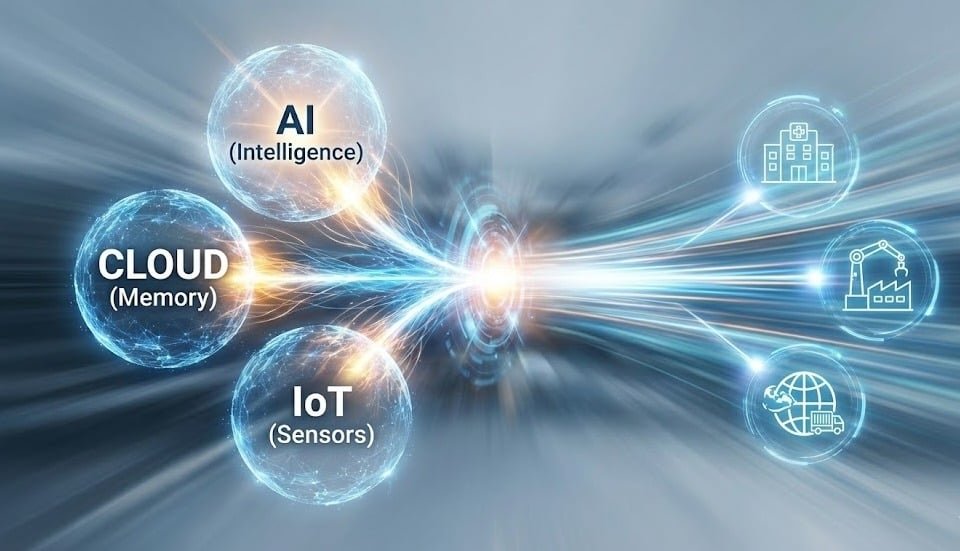
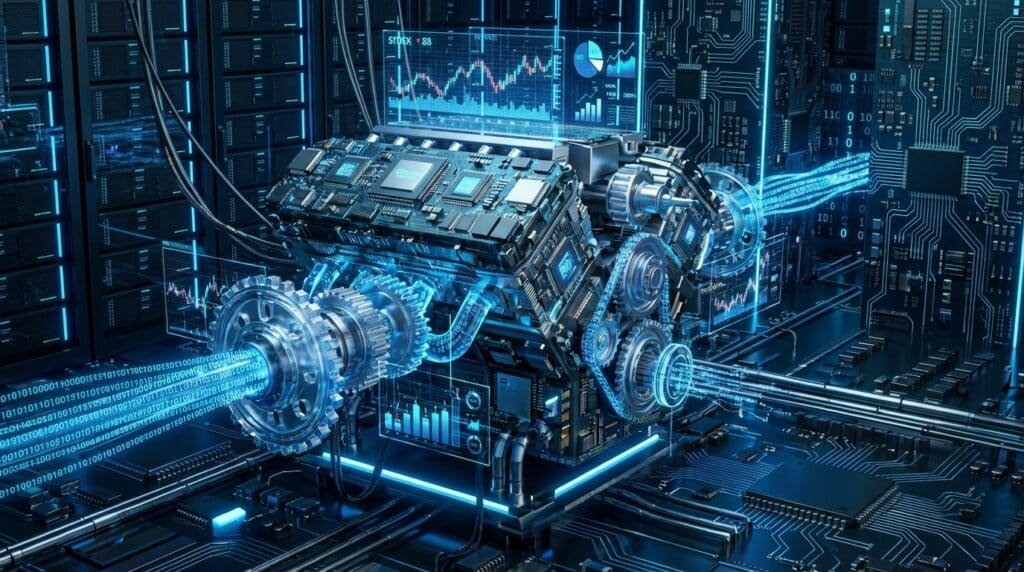
The speed at which the world is changing today is based on an unprecedented alliance between three forces working simultaneously: artificial intelligence, cloud computing, and smart sensors. Together, they form an ecosystem capable of reacting in a matter of seconds.
Cloud Computing: Imagine a virtually infinite reservoir of power. Instead of relying on the limited memory of a single computer, technologies draw on global servers. This makes it possible to process colossal amounts of data instantly.
IoT Sensors: These are the true “eyes” and “ears” of the digital world. Whether they are cameras, temperature sensors, or GPS devices, they capture physical reality (a traffic jam, a drop in temperature) and transform it into immediately usable information.
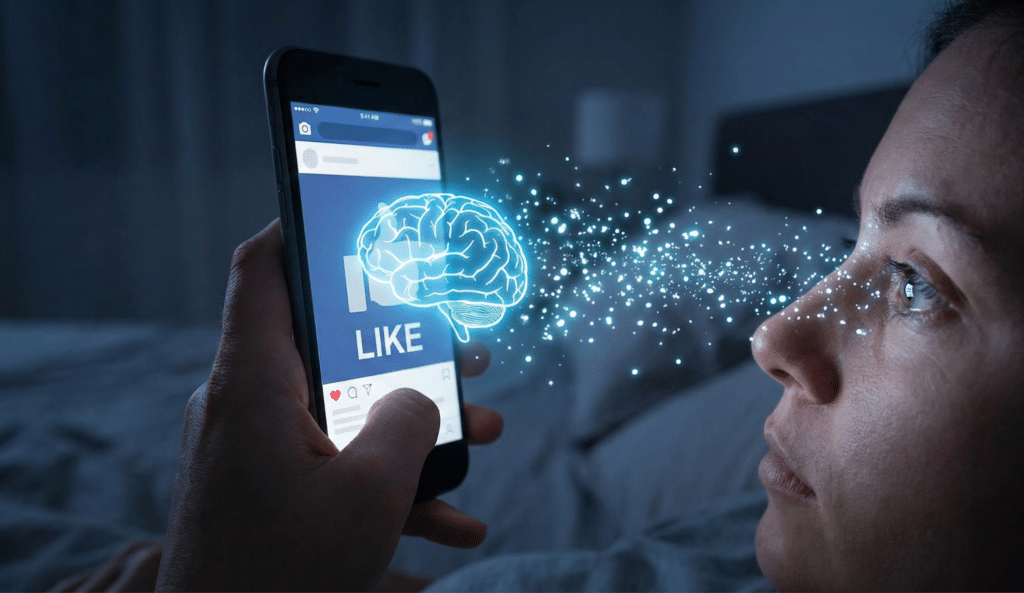
Since the 1970s, the time between an invention and its launch on the market has been steadily decreasing. This acceleration has found its ideal tool in the smartphone: it has become the universal device that puts this colossal power directly in your pocket.
The current acceleration is no coincidence. It is the result of sensors that “see” the world and a cloud that provides unlimited computing power, all accessible via our mobile devices.
Une transformatA transformation with tangible benefitsion aux bénéfices tangibles
Unlike previous industrial revolutions (such as steam power), the current digital revolution is spreading at breakneck speed. It is not just changing our tools, it is transforming every aspect of our daily lives. This movement has become irreversible: digital technology is now the driving force behind our economy.
Today, data has become as valuable a resource as oil. For a company, knowing how to use it is essential for its survival; without it, it is impossible to remain competitive.
The benefits of this revolution are no longer theoretical; they are reshaping our daily lives before our very eyes. This transformation is primarily reflected in increased efficiency: where it used to take days to process an administrative file or analyze an inventory, now it takes just a few seconds, with surgical precision.
The modernization of our industries is the most striking example of this. Factories are no longer simple assembly lines, but intelligent ecosystems: a defective part is spotted by an AI camera before it is even assembled, and the supply chain adjusts itself to avoid any stock shortages.
Finally, this shift is redefining our simplest actions. Think about how we consume: with a single click on a smartphone, we trigger a highly optimized global supply chain. Our working methods have followed the same curve, breaking down geographical barriers through real-time collaboration. More than just a technical evolution, a new era of usage is dawning, making our interactions more fluid, faster, and definitively digital.
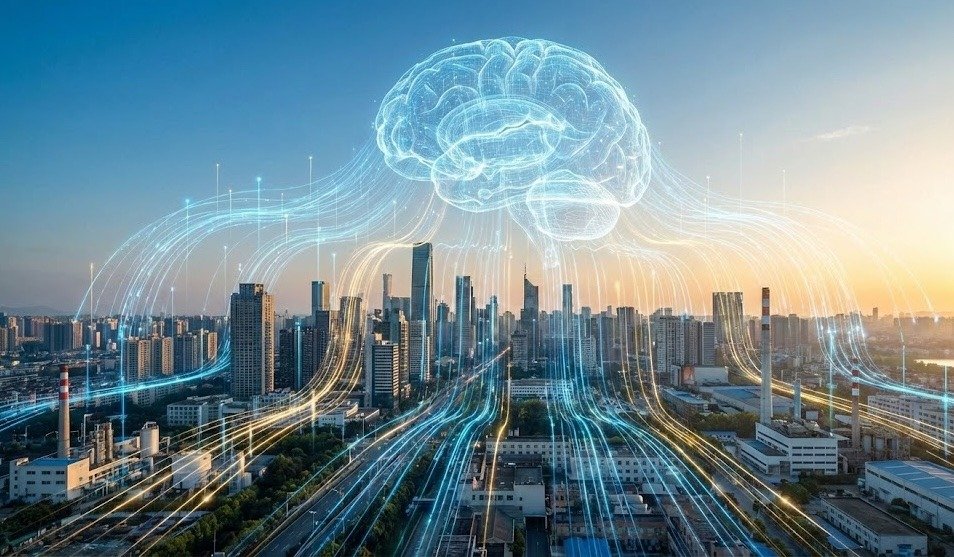
The brain: the natural model for our technologies
To understand the evolution of digital technology, it is fascinating to observe the most sophisticated organ in the world: our own brain. In fact, today’s innovations are directly inspired by our biological architecture to increase our abilities tenfold:
- Automation as “autopilot”: Just as our brains manage our vital functions (breathing, digestion) without us having to think about them, modern systems take care of repetitive tasks. This frees up valuable time for us to focus on creativity and strategy.
- Networks as a nervous system: Just like our neurons, which exchange signals every moment, digital networks circulate massive data flows at the speed of light to connect the entire world.
- Sorting information: Just as our minds filter sounds and images to retain only what is essential, smart technologies are now learning to sort and prioritize important signals to prevent us from becoming overwhelmed with information.
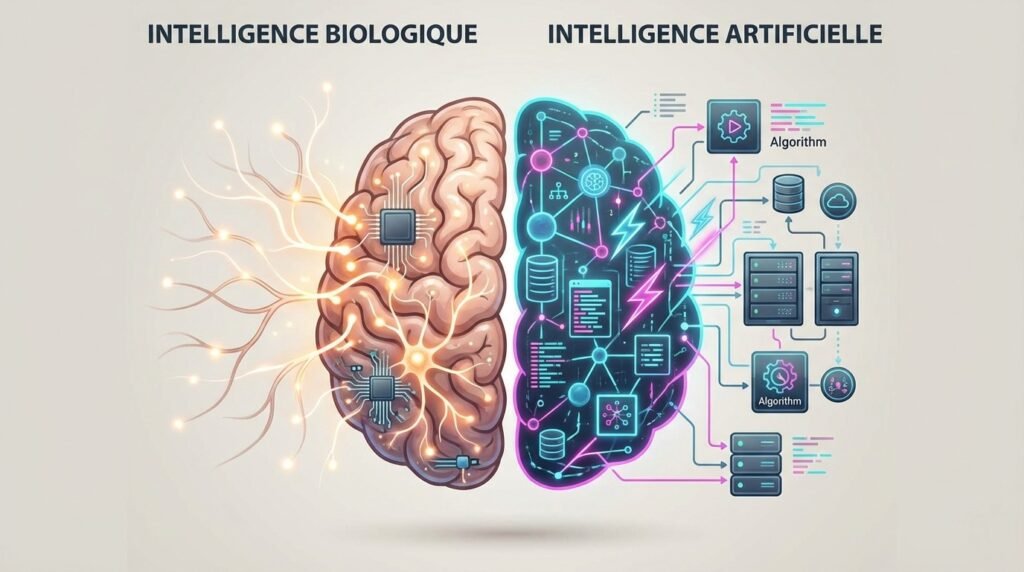
This comparison shows that innovation is not there to replace us, but to act as an extension of our own capabilities. Technology is thus becoming the new “nervous system” of our global economy.
Artificial intelligence and connected networks in 2026
This biological mechanism now inspires digital tools that extend or amplify our abilities. Based on this model, emerging technologies are radically transforming the way we interact with machines and process information.
Generative AI versus augmentative AI
It is useful to distinguish between two types of artificial intelligence that do not have the same mission. On the one hand, generative AI acts as a creator: it is capable of producing original content, whether text, images, or computer code. On the other hand, augmentative AI acts as an elite assistant: it analyzes mountains of data to inform our decisions, becoming a true working partner.
This intelligent automation transforms your daily life by taking care of repetitive and time-consuming tasks. By freeing up your time, it allows you to focus on what matters most: strategic thinking and creativity.
The impact is particularly striking in the healthcare sector. Thanks to the accuracy of algorithms, modern diagnostics now make it possible to detect serious diseases much earlier than before, offering prospects for much more effective treatment.
As Forrester points out in its technology trends report, this transformation is no longer a hypothesis but a market reality.
L’Internet des objets pour un environnement réactif
The Internet of Things (IoT) does more than just connect devices; it literally makes our environment “aware.” Imagine a smart city where networks of sensors manage traffic and energy consumption in real time. In this scenario, the urban space adapts to your immediate needs, streamlining your journeys and reducing your carbon footprint invisibly.
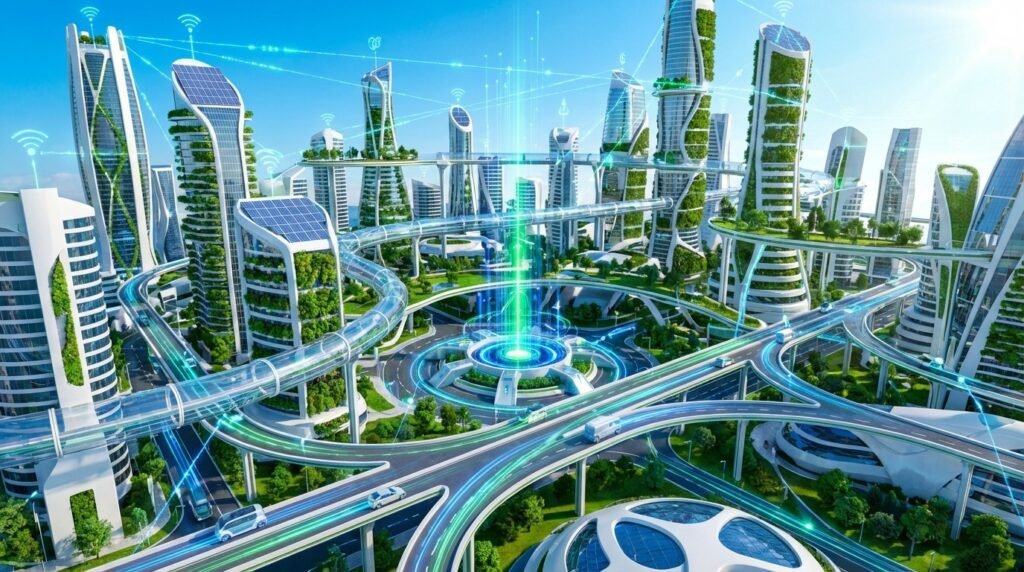
This intelligence is also being deployed at the heart of industry, where operational efficiency is reaching new heights. Thanks to the IoT, companies are monitoring their machines and inventories every second of every day. This total visibility allows logistics to become more accurate, eliminating unnecessary losses and anticipating breakdowns before they even occur.
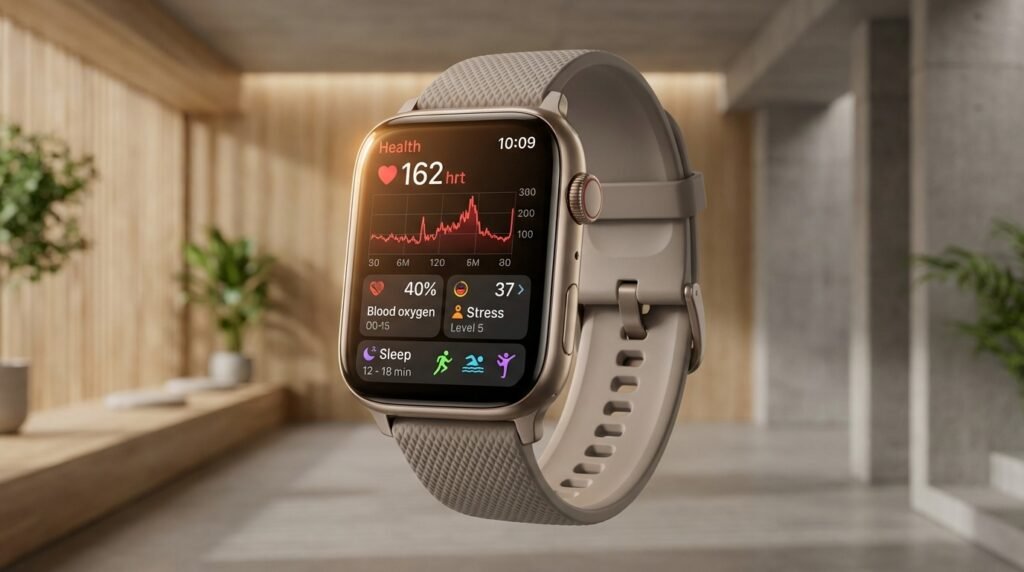
The healthcare sector is undergoing a similar revolution with the rise of wearable devices (smartwatches, smart patches). By continuously monitoring your vital signs, these devices pave the way for ultra-responsive preventive medicine: your doctor can be alerted to an abnormality even before you feel any symptoms. Before our very eyes, the physical world is becoming digitized, creating a constant dialogue where objects now talk to machines to simplify our lives.
Blockchain and decentralization of trust models
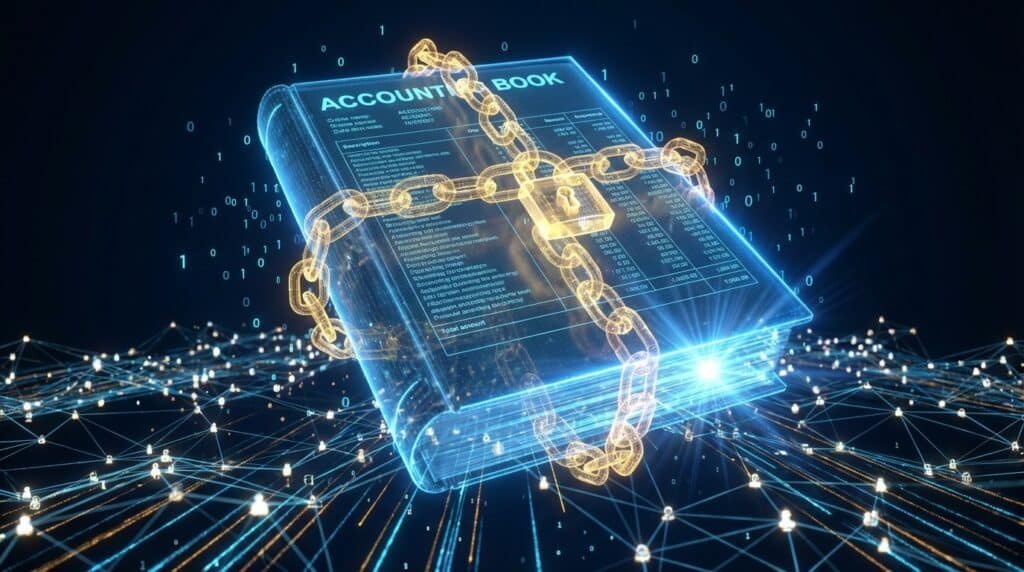
Blockchain is often perceived as a complex concept, but it can be thought of as a large digital ledger, shared by thousands of users and, above all, impossible to falsify. Unlike a traditional system where a bank or government agency holds the sole authority, here, each transaction is verified and validated by the entire network.
This technology provides unprecedented traceability, particularly in the supply chain. Every stage in a product’s life, from manufacture to delivery, is permanently recorded in this shared ledger. For businesses and consumers, this means total transparency: it becomes impossible to cheat on the origin of a component or the journey of a food product.
Beyond security, the strength of blockchain lies in cost reduction. By eliminating intermediaries that typically slow down processes and charge commissions, it makes exchanges direct, fast, and seamless. Trust is no longer based on a human institution, but on a computer code shared by all. A true decentralization of the economy is taking place before our eyes, redefining models of trust around the world.
Mutation des structuChange in production structures and performanceres productives et performance
These structural innovations are redefining the way we create value.
To measure the concrete impact of these technologies, let’s consider a few current examples. In the logistics sector, connected systems and IoT sensors already make it possible to track inventory levels, delivery speeds, and the temperature of sensitive products in real time, reducing losses by up to 30% in some supply chains.
In healthcare, AI is used to analyze thousands of medical images in seconds, helping professionals detect abnormalities earlier and more accurately than with traditional methods. Where hours of human labor were once required to sort through data, intelligent automation now produces results with just a few clicks. These examples show that emerging technologies are not distant concepts, but tangible drivers of transformation already at work today.
Productivity and optimization of repetitive processes
Intelligent automation is the primary driver of this transformation. It reduces operating costs by eliminating repetitive human errors in factories and offices. By entrusting tedious manual or administrative tasks to machines, humans regain valuable freedom to focus on strategic oversight. For the most advanced players, productivity gains can reach new heights, finally making manufacturing and management processes smooth and predictable.
Predictive maintenance and real-time decisions
These structures are now managed using predictive maintenance. Imagine algorithms capable of “sensing” the fatigue of a mechanical part by analyzing vibrations or heat, long before a breakdown occurs. Instead of waiting for a breakdown, which often costs a fortune in production downtime, repairs are carried out at the precise moment they are needed. This responsiveness is made possible by instantaneous information flows: every piece of data captured in the factory contributes to real-time decision-making, optimizing energy consumption and reducing waste of resources.
Responsiveness becomes total in the face of market uncertainties. Every piece of data counts toward maximizing overall performance.
L’émergence de l’industrie 4.0 et de laThe emergence of Industry 4.0 and robotics robotique
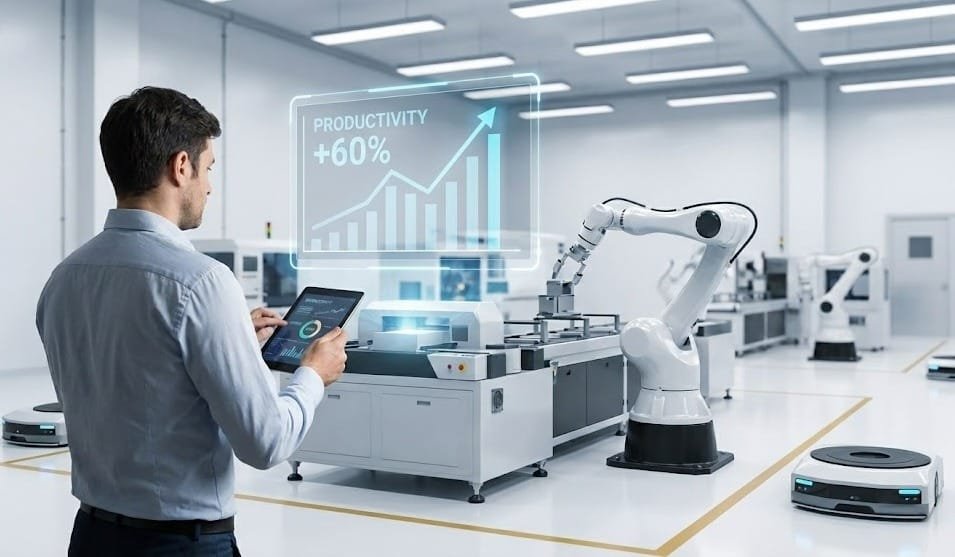
Connected factories are now establishing themselves as the new global standard, marking the advent of Industry 4.0. In this ecosystem, machines communicate with each other constantly, orchestrating production with increasing autonomy. This technological revolution has radically transformed competitiveness: in thirty years, optimization through robotics has halved manufacturing costs.
Far from replacing humans, we are witnessing the rise of collaborative robotics. More agile and precise robots now work side by side with skilled workers, creating a synergy that is reshaping the industrial landscape. However, this global automation requires perfect synchronization of the entire supply chain; in this high-precision mechanism, the slightest hiccup can have major repercussions, requiring constant vigilance and control.
Driven by rapid advances in artificial intelligence, these factories are no longer simply places of manufacture, but living, learning environments. This embedded intelligence enables a shift from rigid mass production to flexible, responsive manufacturing capable of adapting to market uncertainties in record time.
Evolution of professions and human-machine collaboration
This industrial transformation inevitably leads to a rethinking of our careers and working methods.
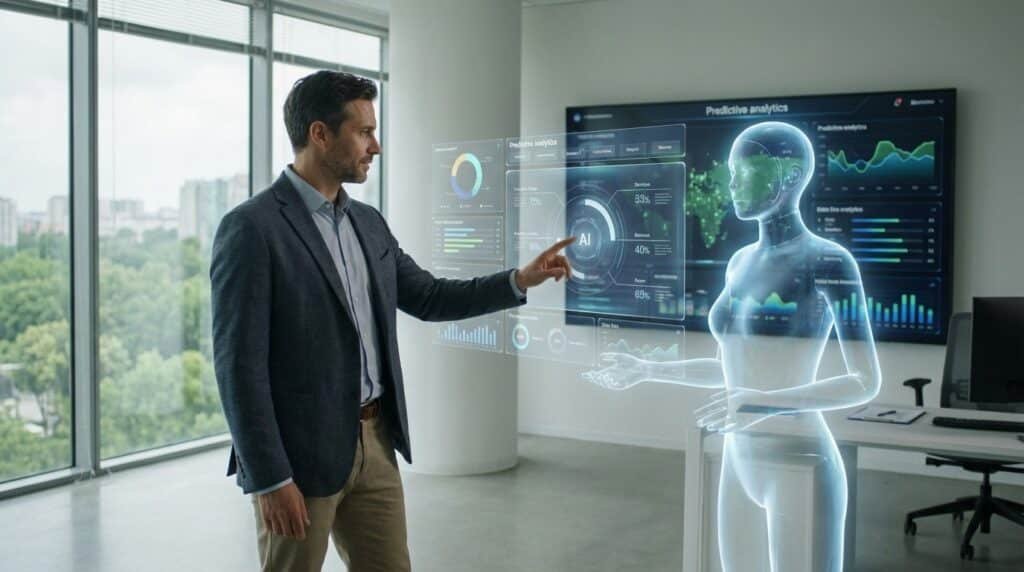
Augmented collaboration at the heart of the office
The shift from passive digital to emerging adaptive technologies is a game changer. Your software learns from your daily habits. It anticipates your needs before you even click.
Algorithmic assistance now secures decision-making. Executives use big data to make decisions. Intuition is now based on solid evidence, reducing uncertainty.
Visualize the concept of work enhanced by these interfaces. Humans and machines form an effective duo. Individual productivity reaches unprecedented heights thanks to this fusion.
The office is changing. Collaboration is becoming intelligent.
Develop expertise in data and cybersecurity
We are witnessing the rise of new hybrid professions. We are looking for profiles capable of understanding AI. We are no longer just looking for technicians, but profiles capable of translating the capabilities of artificial intelligence into concrete opportunities. At the heart of this organization, the data analyst is becoming the new cartographer of the company, capable of extracting value from a mass of data that was once unreadable.
At the same time, protecting digital infrastructure has become essential for survival. With increasingly sophisticated cyberattacks threatening the stability of organizations, cybersecurity experts now play a strategic role. Their mission is to lock down every sensitive access point to ensure the integrity of the company in an interconnected world.
Finally, trend analysis confirms a growing need for strategic leadership. The AI Manager is emerging as a visionary project manager, capable of coordinating humans and machines. These new leaders are not content with simply mastering the tool; they anticipate future developments to keep their organization at the forefront of innovation, transforming technology into a lever for sustainable growth.
Supporting change and continuing education
Finally, the success of this transition depends on human support. Overcoming resistance to change is a major challenge that requires constant education on the part of managers. Continuing education is no longer a luxury but an essential investment to ensure job security. In this fast-paced world, learning has become a daily activity, transforming each employee into an active driver of their own work tools.
Ethics and society: the challenges of responsible innovation
The deployment of artificial intelligence raises major ethical questions, starting with the neutrality of automated decisions. Algorithms rely on training data that sometimes invisibly reflects our own biases or past discrimination. Without constant human vigilance to monitor the neutrality of the code, these tools risk unintentionally amplifying these biases. Ensuring the fairness of these systems is no longer a simple technical option, but an urgent necessity to maintain trust in digital technology.
Borders do not stop digital flows, often rendering national laws insufficient. Strict international cooperation is needed to regulate effectively.
Digital education as a lever for empowerment
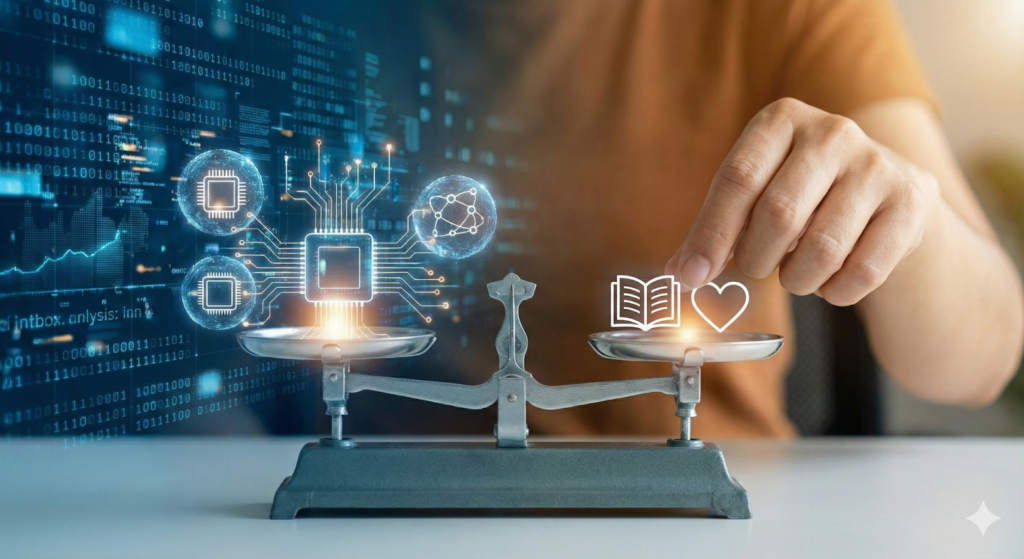
At the same time, blind dependence on emerging technologies could undermine our fundamental expertise. By systematically delegating our thinking to machines, we risk gradually losing our critical autonomy. It is therefore essential that humans retain ultimate control over important decisions. Technology must remain a tool to assist us, not a substitute for our personal judgment, in order to preserve our skills and freedom of action.
Knowledge is literally power in this connected world. The future will belong to enlightened minds.
Finally, technological acceleration must not come at the cost of social exclusion. Unequal access to these powerful tools is creating an ever-widening gap, where digital illiteracy (difficulty using digital tools) risks leaving the most vulnerable behind. To preserve the cohesion of our society, it is imperative that we transform this change into an inclusive movement. The challenge is to ensure that digital progress benefits as many people as possible, making education and accessibility the pillars of this new era.
FAQ: Understanding the Technological Revolution
What exactly defines an emerging technology? It is characterized by its ability to permanently change practices, economic models, and social interactions, creating a clear break with traditional tools.
Why is innovation accelerating so rapidly? Thanks to the convergence of AI, IoT, and the cloud, coupled with increasingly shorter innovation cycles and massive mobile adoption.
What is the impact on productivity? Companies gain an average of 15% in revenue and reduce their costs by 20%. For the most advanced, productivity gains can reach 60%.
What are the major risks? Algorithmic biases that automate our prejudices, excessive delegation of decisions to machines, and a growing social divide, where digital illiteracy excludes those who do not master these tools that have become indispensable.
Final word:
Technology is an amplifier.
It increases our productivity, but it can also amplify our flaws if it is not used ethically.