
Binaural beats: cognitive revolution or simple sound illusion?
In our perpetual quest for mental optimization, one trend is currently pulsing through the web: binaural beats.
Marketed as tools capable of “hacking” your state of mind—whether by skyrocketing your focus or plunging your brain into a deep sleep—they spark as much fascination as they do skepticism.
At BrainTech.life, we explore the thin line between technological innovation and human cognitive potential. As mental overload becomes the modern norm, the demand for cerebral regulation tools has never been higher. From students seeking memory boosts to creatives chasing “flow” and 21st-century insomniacs, everyone is turning to this “software solution” for the mind.
Beyond the Marketing: Expert Analysis
But what is actually happening behind your headphones? Is this a genuine case of neural synchronization (the famous brainwave entrainment) or simply a cleverly packaged placebo effect?
To separate myth from reality, we have deconstructed the biophysical mechanisms of this technology. Here is our analysis of what could be either a revolution in audio-based brain-machine interfaces or a mere psychoacoustic curiosity.
What are binaural beats? The mechanism explained
The concept is based on a fascinating neurophysiological phenomenon called a « binaural beat ». Although the term may seem complex, the principle is simple: it is an auditory illusion generated by your brain when you listen to two slightly different frequencies in each ear.
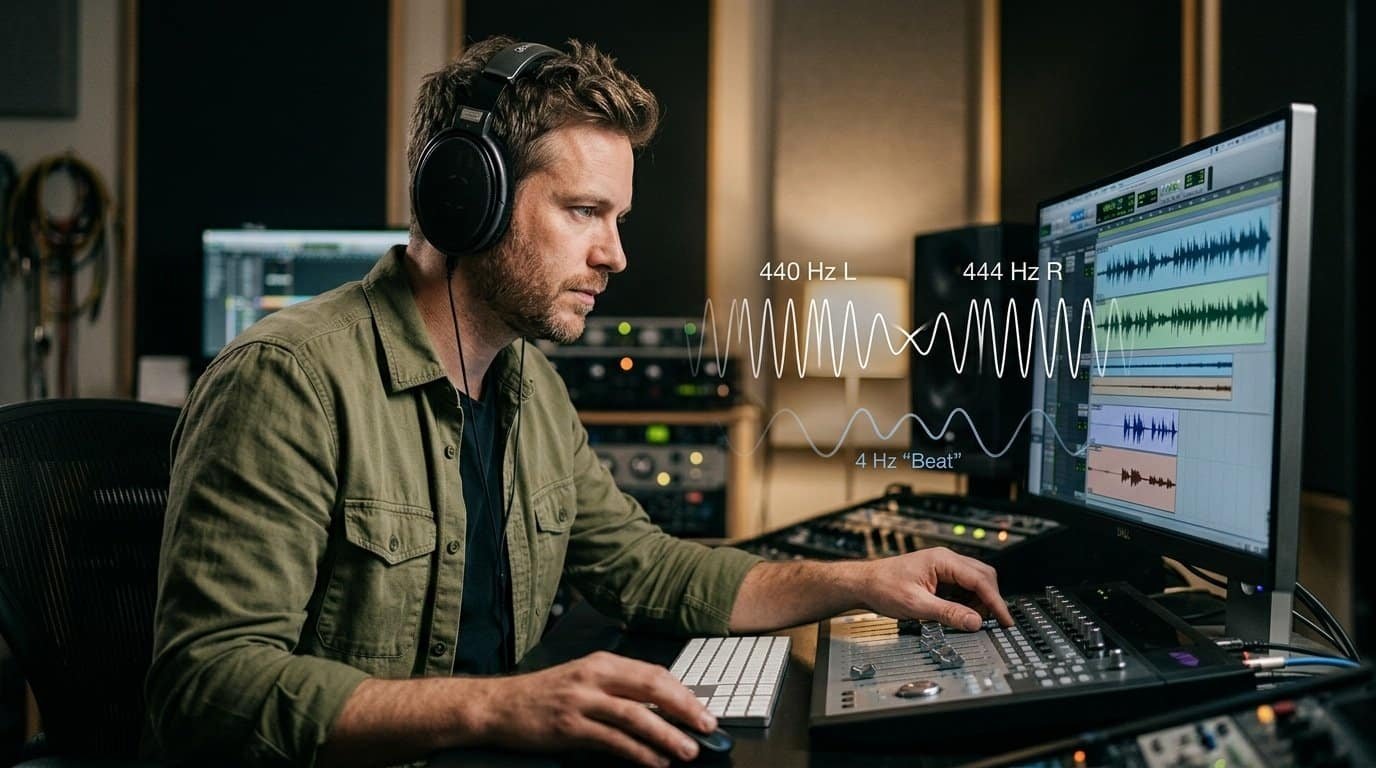
For example, if you send a 440 Hz frequency to your left ear and 444 Hz to your right ear, your brain does not perceive two distinct sounds. It « compensates » for this difference by creating a third internal frequency of 4 Hz. This 4 Hz beat frequency corresponds to the difference between the two original stimuli.
Why is this relevant for the brain?
Brainwave entrainment theory (brainwave entrainment) suggests that the brain has a natural tendency to align its own electrical oscillations with this induced frequency. By adjusting the sounds played, it may be possible to invite your brain to adopt a specific state (relaxation, alertness, or sleep).
Binaural beats and brainwaves: what should you know?
To understand the value of binaural beats, these frequencies must be classified according to the targeted brainwaves:
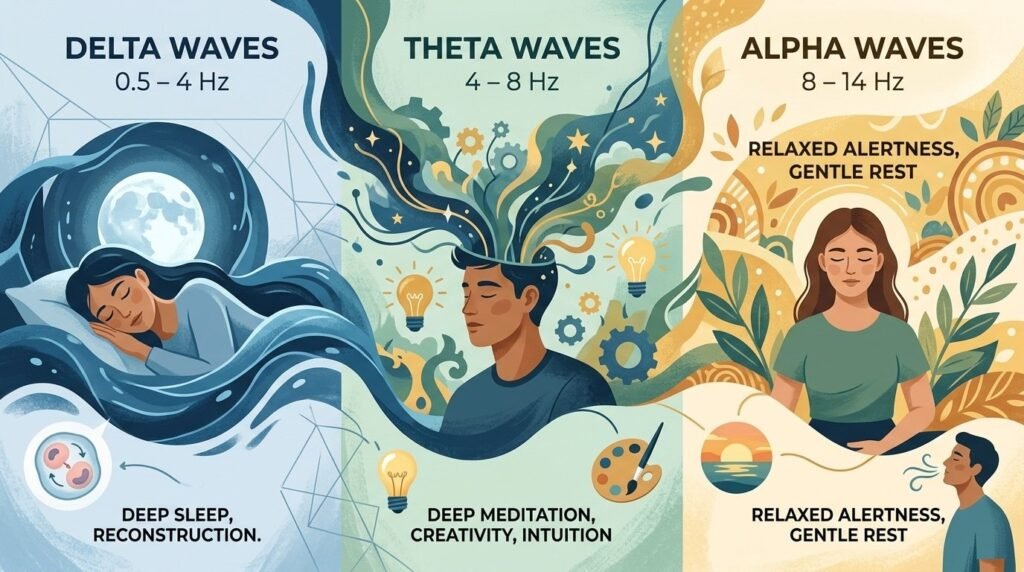
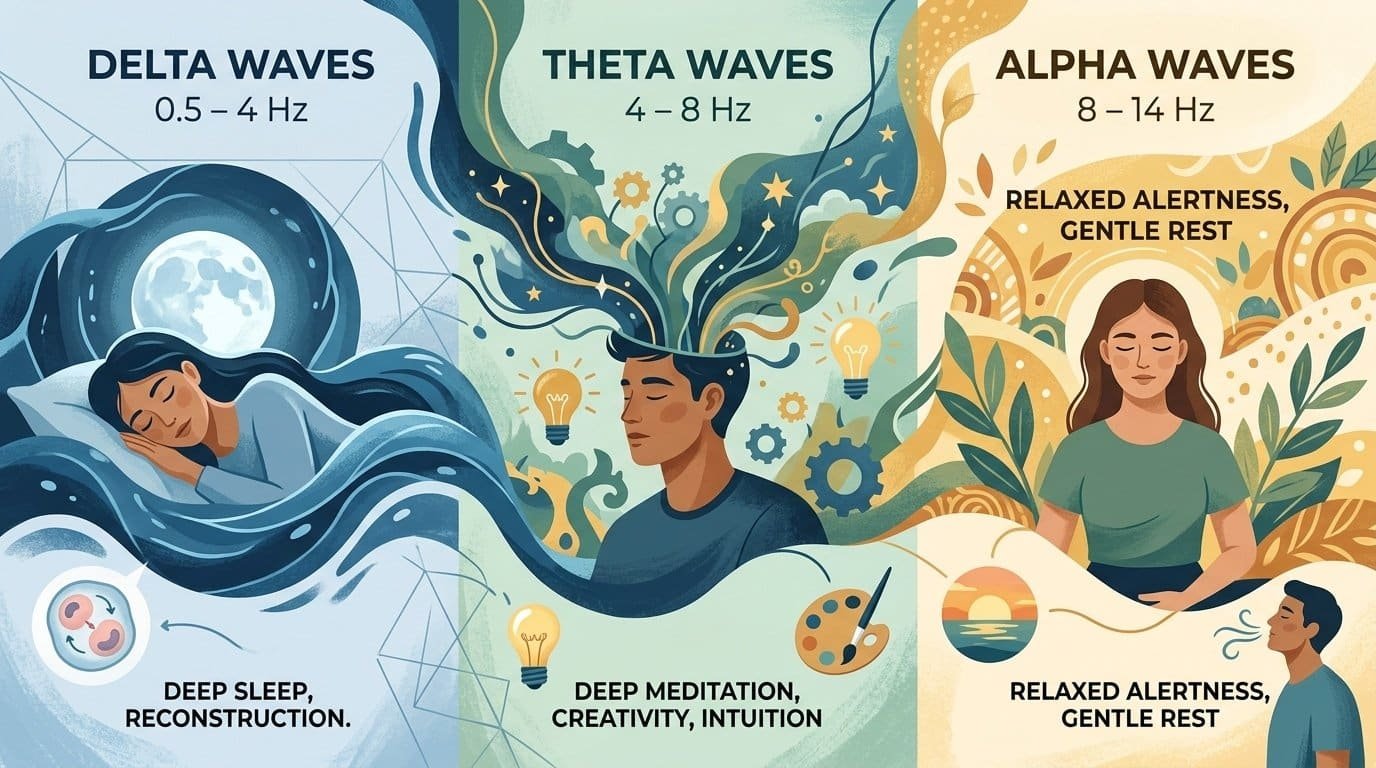
- Delta waves (0.5 to 4 Hz) : Associated with deep sleep and cellular regeneration. Used to help falling asleep.
- Theta waves (4 to 8 Hz) : Linked to deep meditation, creativity, and access to the subconscious.
- Alpha waves (8 to 14 Hz) : The state of « awake relaxation ». Ideal for reducing anxiety before a presentation or after a busy day.
- Beta waves (14 to 30 Hz) : Correspond to alertness, logical reasoning, and active concentration.
Real effectiveness or placebo effect?
Scientific research is divided.
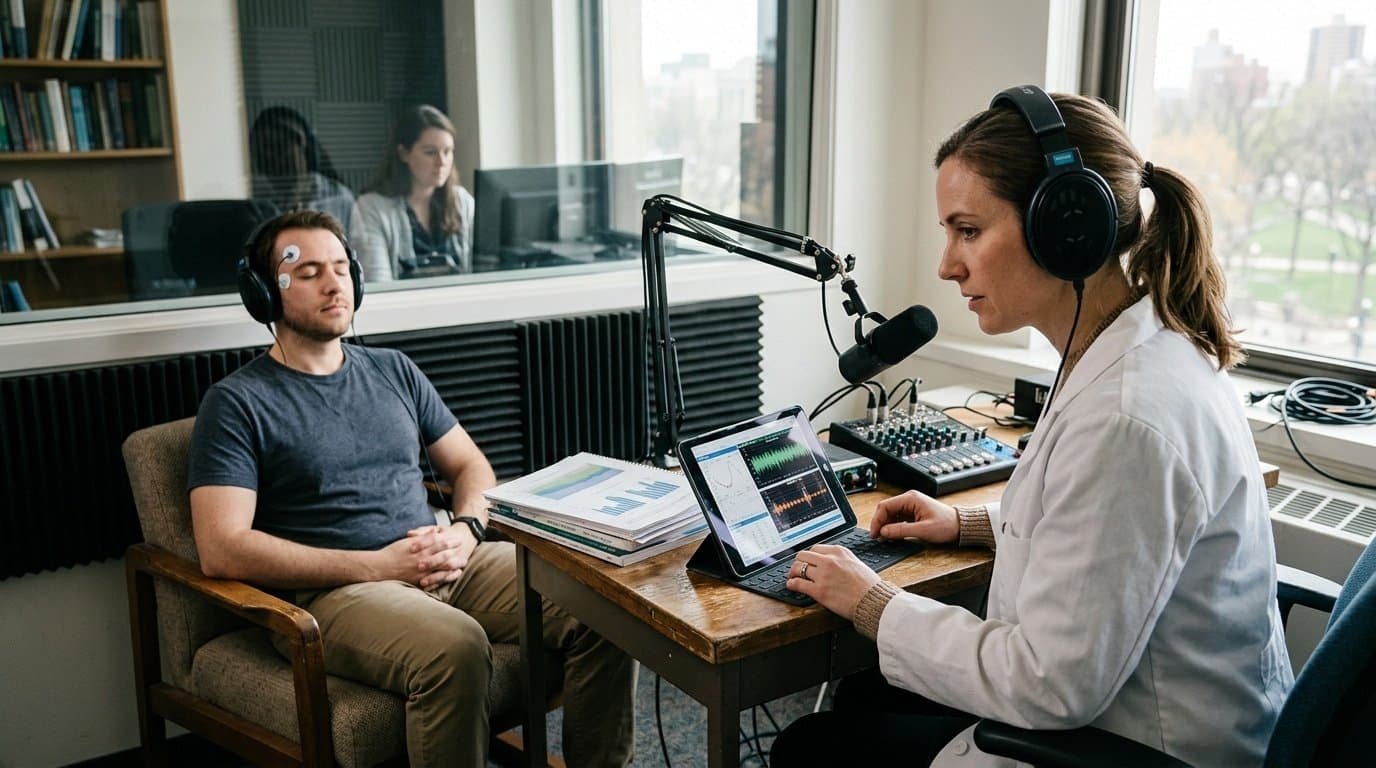
While some clinical studies suggest a significant reduction in preoperative anxiety or an improvement in short-term memory, other work struggles to isolate the pure binaural effect from the simple relaxation effect caused by background music.
However, it would be simplistic to dismiss the « placebo » concept outright. If exposure to these sounds helps an individual create a bubble of focus by isolating outside noise, the goal is achieved. The brain, placed in a repetitive and structured sound environment, eventually integrates the practice as a « signal » to start a specific cognitive task.
How to integrate binaural beats into your daily routine
To test the effectiveness of these frequencies safely, here is a structured approach based on current best practices:
1. The sine qua non condition: headphones
This is the crucial technical point. The binaural effect can only occur if each ear receives a distinct signal. Using speakers (even stereo) cancels the effect because the frequencies mix in the air before reaching your eardrums. So use a good-quality headset or headphones.
2. The ideal dosage
There is no need to listen to these sounds for hours. The brain can experience auditory fatigue.
- For deep work : 30 to 45 minutes of Beta or Alpha waves.
- For sleep : A 20-minute Delta-wave sequence with an automatic stop once asleep.
3. Precautions for use
Although the technique is safe for most users, it is contraindicated for :
- People with epilepsy (because of brainwave stimulation).
- Listeners operating machinery or driving: altered states of consciousness may slow reflexes.
FAQ: Quick answers to your questions
Is it necessary to listen to binaural beats very loudly?
Absolutely not. The volume should remain comfortable, or even low. A high sound level masks the binaural effect and unnecessarily tires the auditory system.
Can I combine these sounds with music?
Yes, many creators now integrate binaural beats in the background under rain sounds or lo-fi music. This makes the experience much less monotonous.
How long before I feel effects?
It varies from person to person. Some feel immediate soothing, while for others it takes an adaptation period of a few days for the brain to « recognize » the sound signal.
Where can I find reliable binaural beats?
Favor sources that explain the frequencies used. YouTube is a vast resource, but be selective: check that the video clearly specifies the frequency ranges sent to each ear.